
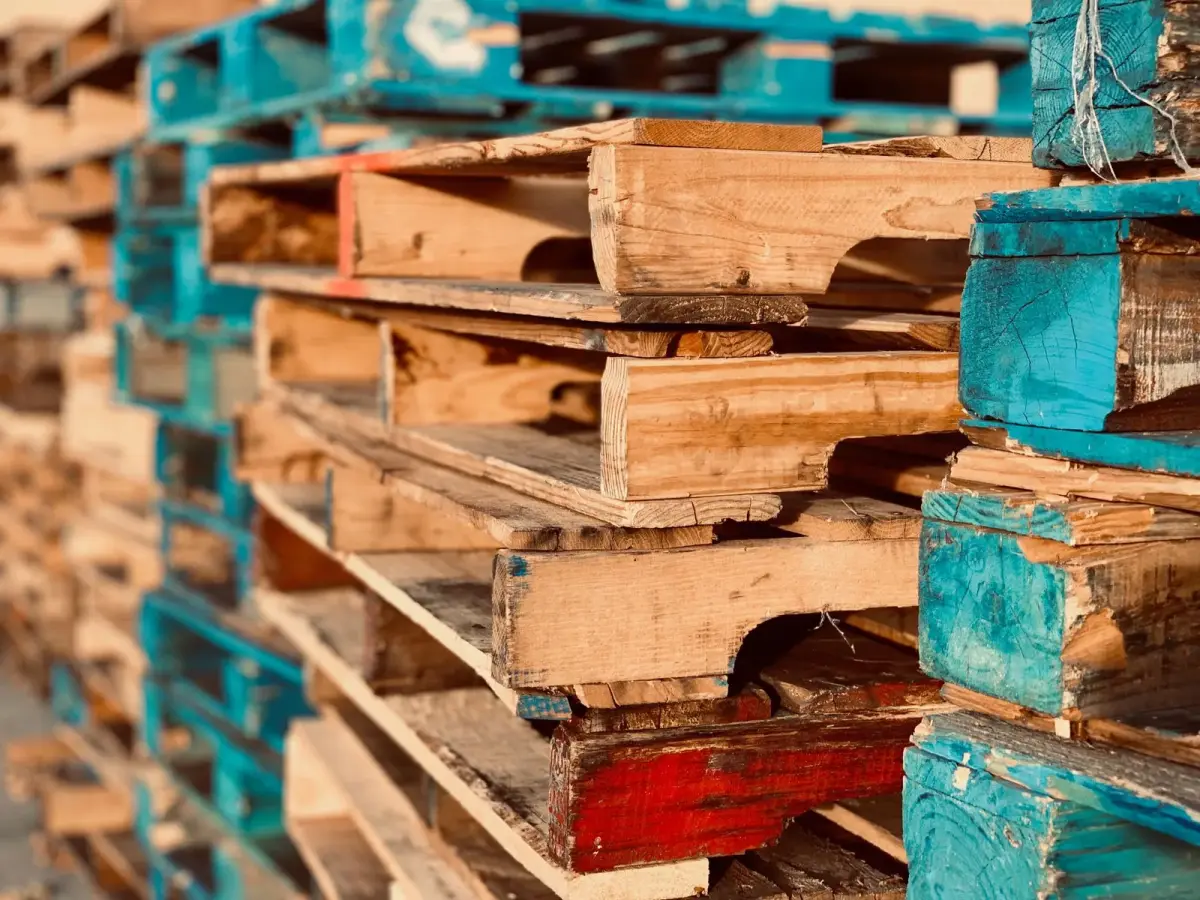
Every pallet buyer knows two numbers: what a new pallet costs and how many are on the next purchase order. On October 8, 2026, the first one was $14.89 for a new wood pallet on Repackify's national price index, while a 48x40 rackable plastic pallet listed at $135 in Uline's catalog. Put those side by side and the plastic pallets vs wooden pallets debate looks finished before it starts.
It isn't. The price tag is the one pallet cost that arrives on a single invoice. Everything else (the repairs, the pallets that never come back, the weight in every trailer, the jam on the conveyor at 2 a.m., the sanitation audit) lands in somebody else's budget. We wrote about that scattering in The Pallet Is Costing You More Than You Think. This post does the arithmetic.
What follows is a total cost of ownership comparison for a closed-loop operator: a verdict, a scorecard, the evidence line by line and a worked cost-per-trip model. We'll also be straight about where wood still wins.
Key Takeaways
- In a closed loop, plastic pallets vs wooden pallets is a cost-per-trip question, not a price question. Our illustrative model puts new white wood at about $3.88 a trip and an owned plastic pallet at about $2.85, before downtime and damage.
- Loss is the swing variable. Owned plastic beats 5-trip wood until about 1.9 percent of pallets go missing per trip, and beats a well-repaired 10-trip wood fleet only below about 0.6 percent.
- Capital is the other wall. An 11,000-pallet plastic fleet at catalog price costs about $1.49 million up front and takes roughly five years of cash savings to pay back.
- The biggest wood costs land outside the pallet budget: jams that 53 percent of surveyed operators hit daily or weekly (2019), and downtime that Siemens prices at $36,000 an hour in consumer goods.
- Wood still wins one-way export and short horizons. For a closed-loop operator, a leased, tracked plastic fleet designed to price at or below a wood program is the strongest position on the board.
The Verdict on Plastic vs Wood Pallets
Our Verdict
For a closed loop that runs each pallet more than a few dozen times, plastic costs less per trip than wood. A leased, tracked plastic fleet also removes the two risks that make owning plastic hard: the capital outlay and the cost of pallets that disappear. Wood remains the right call for one-way shipments and short horizons.
The reason is simple to state. Wood is cheap per pallet and expensive per trip, because a white wood pallet lasts about 3 to 5 trips before it's scrapped, against roughly 100 to 200 or more for our recycled HDPE pallets. Plastic is the reverse: expensive per pallet and cheap per trip, but only if the pallet keeps coming back. That last condition decides more than the material does.
Here is how the three options compare on the attributes buyers check first.
| Attribute | Wood (New) | Owned Plastic | APS Lease |
|---|---|---|---|
| Unit price | $14.89 (index, Oct 2026) | $135 (catalog rackable) | No purchase; flat monthly fee |
| Trips per pallet | About 3 to 5 (white wood) | About 100 (LCA assumption) | About 100 to 200+ |
| Repair | Boards and nails, by hand | Not repaired; replaced | No replacement cost |
| A lost pallet costs you | About $15 | About $135 | No replacement cost |
| Empty weight, 48x40 | 40 to 45 lb (recycled wood) | 50 lb (structural foam) | Up to 30% lighter than wood |
| Sanitation | Porous, hard to clean | Washable | Non-porous, pressure washable |
| ISPM 15 for export | Heat treat and stamp | Exempt | Exempt |
| Tracking | None built in | None built in | Embedded GPS and sensors |
Plastic Pallets vs Wooden Pallets: The Scorecard
| Criterion | Wood | Owned Plastic | APS Lease | Edge |
|---|---|---|---|---|
| Cost per trip, closed loop | 4/10 | 7/10 | 9/10 | APS Lease |
| Upfront capital | 8/10 | 3/10 | 9/10 | APS Lease |
| Exposure to lost pallets | 6/10 | 3/10 | 9/10 | APS Lease |
| Repair and upkeep | 3/10 | 8/10 | 9/10 | APS Lease |
| Freight weight | 5/10 | 5/10 | 8/10 | APS Lease |
| Sanitation and compliance | 4/10 | 8/10 | 9/10 | APS Lease |
| One-way export | 8/10 | 3/10 | 2/10 | Wood |
How we scored it: cost per trip comes from the worked model below, where owned plastic wins only while losses stay low; the APS lease is scored on its design target of pricing at or below a wood program with no replacement cost, sensors and reporting included. Upfront capital is what you pay before the first trip, and exposure to loss is what one missing pallet costs you. Freight follows empty weight, with the APS score resting on its stated claim of up to 30 percent lighter than wood; sanitation and compliance follow FDA's cleanability rule and ISPM 15. One-way export goes to wood, on anyone's network.
Wood Pallet Cost vs Plastic Pallet Cost: Price, Trips and Repair
Ask how much does a pallet cost and you'll get the answer for one transaction. Repackify's national index put a new-grade wood pallet at $14.89 and a Grade A used one at $7.84 on October 8, 2026, across all sizes. Uline lists its 48x40 rackable HDPE structural foam pallet at $135. On the purchase order, plastic is about nine times the price of new wood.
Trips Turn Price Into Cost
Price divided by trips is where the comparison flips. We rate white wood at about 3 to 5 trips and pooled hardwood at about 15, against roughly 100 to 200 or more for our HDPE pallets. Lab testing points the same way. In Virginia Tech's FasTrack simulation, a whitewood stringer pallet failed after 11 cycles on average while an ORBIS plastic pallet completed up to 200 without failure (Refrigerated & Frozen Foods, 2018). Penn State's 2020 life cycle assessment assumed 100 trips for plastic and 33 for a quality pooled wood pallet (Pallet Enterprise). Different tests, same direction.
Lab cycles aren't field trips. FasTrack cannot simulate misuse, and a 2023 BioResources study found stringer notch damage on 52 percent of pallets pulled from the field, against 19.2 percent in the lab. The field isn't gentler than the test rig. It breaks wood in different places.
Pallet Repair: The Cost That Keeps Coming Back
Wood's answer to short life is repair, and repair works up to a point. The same study notes that pallets fail as their initial damage worsens with use, and it cites the classic rule for an amortized pallet: replace it when its average cost per use reaches its minimum, because past that point maintenance costs more than a new pallet. Repair is also stubbornly manual. In a Virginia Tech survey of U.S. repair firms, 77 percent repaired pallets by hand with nail guns on a repair table (BioResources, 2016).
Plastic pallets aren't repaired that way. A cracked one is pulled and reground, so the trip count matters more than the repair bill. In our program, end-of-life pallets are shredded back into the APS HDPE stream (more on our Sustainability page).
Wood Pallet Prices Don't Stand Still
There's one more line wood buyers carry that rarely gets priced: volatility. The U.S. producer price index for wood container and pallet manufacturing rose about 53 percent from March 2020 to its April 2022 peak, and it is up 6.9 percent in the twelve months to August 2026. A pallet you buy every few trips reprices every few trips.
A Worked Total Cost of Ownership Model for a Closed Loop
Here is the comparison run end to end for a sample closed loop: one plant shipping to four DCs, 10,000 loaded pallet trips a month. Treat it as an illustration, not an APS quote. Every number is either a published price or rate cited in this post or an assumption we state in the table, and you should swap in your own.
| Assumption | Wood | Owned Plastic | Basis |
|---|---|---|---|
| Trips a year | 120,000 | 120,000 | Our sample loop |
| Pallet price | $14.89 | $135 | Repackify index; Uline catalog |
| Trips per pallet | 5 | 100 | APS 3 to 5; Penn State LCA |
| Repair | $3.00 per 5 trips | None | Our assumption |
| Pallets lost per trip | 1% | 1% | Our assumption |
| Handling labor | 30 seconds a trip | 10 seconds a trip | Our assumption at BLS $18.38/hr |
| Washing | None | $0.10 a trip | Our assumption |
| Cost Per Trip | Wood | Owned Plastic |
|---|---|---|
| Pallet (price over trips) | $2.98 | $1.35 |
| Repair | $0.60 | $0.00 |
| Lost pallets | $0.15 | $1.35 |
| Handling labor | $0.15 | $0.05 |
| Washing | $0.00 | $0.10 |
| Total per trip | $3.88 | $2.85 |
| Per year, 120,000 trips | $465,600 | $342,100 |
On these assumptions, owned plastic saves about $1.03 a trip, or roughly $123,500 a year. With no losses at all, a $135 pallet covers its price against 5-trip wood in about 38 trips. Then look at the two lines that make a CFO hesitate.
The Capital Problem
Running 120,000 trips a year on a 30-day cycle takes about 11,000 pallets with a 10 percent buffer. At catalog price, that's $1,485,000 before the first load ships. Wood never asks for that check. It asks for about $465,600 a year in pallets, repairs and handling, every year. Once bought, the plastic fleet costs about $180,000 a year in cash, mostly replacing lost pallets, so it pays back in a little over five years.
The Loss Problem
The loss line is where owned plastic is most exposed. Losing 1 percent of wood pallets per trip costs 15 cents a trip; losing 1 percent of $135 pallets costs $1.35. Run the same model across loss rates, and against a better repaired wood fleet that makes 10 trips, and the answer moves.
| Pallets Lost Per Trip | Wood, 5 Trips | Wood, 10 Trips | Owned Plastic |
|---|---|---|---|
| 0.25% | $3.77 | $2.28 | $1.84 |
| 0.5% | $3.81 | $2.32 | $2.18 |
| 1% | $3.88 | $2.39 | $2.85 |
| 2% | $4.03 | $2.54 | $4.20 |
Key Takeaway
Owned plastic beats 5-trip wood until about 1.9 percent of pallets go missing per trip, and beats a 10-trip wood fleet only below about 0.6 percent. The material rarely decides plastic vs wood. The loss rate does, and most operators can't measure theirs.
The method works on any network: price over trips, adjusted for the pallets that survive, plus the costs that ride along with every trip. Our Savings calculators put a number on the hidden operational costs most pallet programs never itemize.
The Costs Outside the Pallet Budget: Loss, Freight and Downtime
The model leaves out the lines hardest to pin on one pallet. Every one leans toward a durable, consistent pallet you can find.
Lost Pallets
Loss rates vary enormously: from single digits in automotive to as high as 40 percent in other markets, in the Reusable Packaging Association's loss survey. An Italian study of seven 3PL operations found non-recovery as high as 10 percent in one case, and at the lowest-cost operator, $0.64 of a $1.19 cost per trip went to administration. Even Brambles, which counts its pallets by auditing customer sites, expensed uncompensated losses at 4.7 percent of sales in FY23 before bringing that down to 1.4 percent in FY25 (Brambles). Losses get discovered at audit time, not observed when they happen.
Freight Weight
Freight is a smaller line, but it's paid on every load. ATRI puts the average truck operating cost at $2.336 a mile in 2025, about 48 cents of it fuel (the gap between ATRI's all-in and non-fuel figures). Plastic isn't automatically lighter. Uline's 48x40 structural foam rackable weighs 50 lbs, against 40 to 45 lbs for its recycled wood 48x40, which is why our model gives owned plastic no fuel credit. Weight is a design choice, so check the spec sheet before you count any savings; the weight math is on our Why Plastic page.
Jams and Downtime
Then there's the line nobody budgets for. In Logistics Management's Pallet Report, published in 2019, 53 percent of 259 respondents dealt with pallet quality or bottom board problems causing jams or faults daily or weekly, and half reported non-flat deckboards and inconsistent dimensions (Logistics Management). Wood varies 8 to 10 percent in dimension; ours hold to under 1 percent. Siemens' True Cost of Downtime 2024 puts a lost hour at $36,000 in consumer goods and $2.3 million in automotive. One pallet-caused hour a year in a consumer goods plant adds $0.30 to every trip in our sample loop, nearly a third of plastic's per-trip advantage in the model.
The price tag is the only pallet cost that arrives on one invoice.
Sanitation, ISPM 15 and Labor: The Costs That Follow the Pallet
Under FDA's sanitary transportation rule, pallets are named as transportation equipment, and that equipment must be of a material and workmanship that is “suitable and adequately cleanable for their intended use”. A porous wood deck is a hard thing to call cleanable. In the National Consumers League's test of 140 pallets in 2010, 10 percent of the wood pallets carried E. coli, against 1.4 percent of the plastic ones (NCL). It's one test and not a recent one, but it shows what a porous deck can carry.
Our pallets are non-porous and pressure washable, so the plastic column in our model carries a washing cost and wood carries none. What wood carries instead is the risk of a rejected load or an audit finding, which no per-trip number captures.
For export, wood packaging entering the U.S. must be treated and stamped under ISPM 15, and USDA APHIS lists plastic pallets among the materials it does not regulate. Treatment isn't free. In a 2008 survey published in Forest Products Journal, wood packaging makers put the pricing impact of a domestic treatment rule most often at $1.00 or more per unit (Hassler et al.). On a domestic closed loop, the line is zero for both materials, which is why it isn't in the model.
Labor is the cost hidden inside all the others. Sorting, inspecting and pulling broken boards is done by people earning a median $18.38 an hour (BLS, May 2025). And pallets hurt people: an estimated 30,493 U.S. emergency room visits for pallet-related injuries from 2014 through 2018, according to Penn State research published in the Journal of Safety Research (Penn State). A pallet with no nails and no splinters takes those two hazards off the floor.
Watch Out
Compliance costs rarely make it into a TCO spreadsheet because they arrive as events: a rejected load, a failed audit, a held container. Ask your quality team what one of those cost last year before you call wood the cheap option.
When Wood Still Wins, and Who Each Option Suits
Wooden pallets are cheap, repairable and accepted almost everywhere. Those are real advantages, and in some networks they settle the question.
- Wood Pallets Best for one-way shipments, especially export, where the pallet never comes back and a $15 pallet beats any durable one. Also the right call for short horizons, seasonal programs and networks where you can't retrieve pallets at all.
- Owned Plastic Pallets Best for captive loops inside your own walls or between your own sites, where you control retrieval, can fund a fleet up front and can prove losses stay well under 1 percent per trip.
- APS Smart Pallet Lease Best for closed-loop partners running repeat lanes between plants, DCs and customers who want plastic's cost per trip without the capital outlay, the replacement risk or the blind spot on where pallets are. Strongest in food, pharma, cold chain and automated facilities.
If most of your pallets leave and never return, buy wood and don't look back. If they come back, the comparison isn't close, especially in the industries we serve, where a bad pallet costs far more than the pallet.
How the APS Lease Changes the Total Cost of Ownership
Look back at the model. Owned plastic wins on cost per trip and loses on two lines: the capital check and the price of a lost pallet. Our program is designed to remove both. It's an all-inclusive monthly lease, built to price at or below what companies already pay for wood pallet programs, with no capital purchase and no replacement cost. One flat monthly cost covers the pallet, the sensors, exception reporting and visibility.
The loss line is where the sensors earn their keep. Every APS pallet carries a sensor module built into the pallet, not bolted on, with cellular GPS plus temperature, humidity and shock, and RFID tags for in-DC scanning workflows. Our Pulse platform reports by exception: quiet when conditions are normal, then a timestamped, geolocated event when a pallet moves or a threshold is crossed, routed to the person who can act. Dwell time by facility and lane shows where pallets sit. That's a different thing from a tag that pings a reader, which we unpack in What RFID Pallet Tracking Actually Tells You, and the full detail is on the Our Technology page.
The rest follows from the pallet: 100 percent recycled HDPE, no nails or splinters, washable, ISPM 15 exempt and consistent to under 1 percent for automated lines. Our pallets are also up to 30 percent lighter than wood, about 2,200 lbs less dead weight per truckload and 1 to 2 percent less fuel per trip, a saving the model above leaves out. When you want to compare a lease with the pallets you run today, Let's Talk.
Sources
- Repackify, “Pallet Price Index,” October 8, 2026
- Uline, “Rackable Plastic Pallet, 48 x 40, Black (H-1211),” 2026
- Uline, “Recycled Wood Pallet, 48 x 40 (H-750),” 2026
- U.S. Bureau of Labor Statistics via FRED, “Producer Price Index by Industry: Wood Container and Pallet Manufacturing (PCU321920321920),” 2026
- Refrigerated & Frozen Foods, “Research Reveals ORBIS Plastic Pallet Can Withstand Up to 200 Cycles,” 2018
- Masis Ulloa, Horvath and White, “Comparison of Damage to Wood Pallets in Use with Damages Occurring Using the Virginia Tech FasTrack Simulation of Pallet Use,” BioResources 18(3), 2023
- Park, Horvath and Bush, “Process Methods and Levels of Automation of Wood Pallet Repair in the United States,” BioResources 11(3), 2016
- Pallet Enterprise, “Wood or Plastic? Which Pallet Is Better for the Environment?” 2020
- Transport Topics, “Truck Operating Costs Rose 3.4% in 2025, ATRI Finds,” 2026
- Siemens, “The True Cost of Downtime 2024,” 2024
- Logistics Management / Peerless Research Group, “The Pallet Report: State of the Pallet Industry,” 2019
- Pallet Enterprise, “Markets in Transition: Lost in Translation,” 2008
- MH&L, “Make Reusable Assets Show Returnable Value,” 2012
- Brambles, “Full-Year 2025 Results Presentation,” 2025
- National Consumers League, pallet testing results (May 2010 archive), 2010
- Code of Federal Regulations, “21 CFR 1.904, Definitions (Sanitary Transportation),” current
- Code of Federal Regulations, “21 CFR 1.906, Requirements for Vehicles and Transportation Equipment,” current
- USDA APHIS, “Wood Packaging Material,” 2026
- Hassler, Grushecky, Slahor and Turk, “An Assessment of the Impacts of a Domestic Phytosanitary Treatment Regulation for Wood Packaging Material Manufacturers,” Forest Products Journal 60(4), 2010
- U.S. Bureau of Labor Statistics, “Hand Laborers and Material Movers,” Occupational Outlook Handbook, 2025
- Penn State News, “After Shipping, Pallets Pose Big Risk to Public, Cause Many Accidents, Injuries,” 2020
FAQ
What Is the Total Cost of Ownership of a Pallet?
It's every cost a pallet creates over its working life, divided by the trips it delivers: purchase or lease price, repair, lost pallets, handling labor, sanitation, freight weight and end-of-life cost, minus any residual value. In closed loops, trips per pallet and the loss rate usually decide the answer.
How Many Trips Does a Plastic Pallet Need to Pay for Itself?
In our illustrative model, a $135 plastic pallet covers its price in about 38 trips against a $14.89 wood pallet that lasts 5 trips, before any losses. Losses push that point out quickly, which is why retrieval matters as much as durability. Your own prices, trip counts and loss rate will move the number.
Is It Cheaper to Repair Wood Pallets or Replace Them?
A single repair usually costs less than a new pallet. But each repair buys only a few more trips, damage tends to worsen with use, and the standard rule is to replace a pallet once its average cost per use stops falling. Plastic pallets aren't repaired board by board; they are replaced and reground.
When Are Wood Pallets the Better Choice?
Wood is the better choice for one-way shipments, including most export, where the pallet won't come back and a low purchase price wins. It also suits short programs and networks where you can't retrieve pallets. Note that wood packaging crossing borders must be ISPM 15 treated and stamped, while plastic pallets are exempt.
Does Leasing Plastic Pallets Cost More Than Buying Wood?
Not necessarily. Our all-inclusive monthly lease is designed to price at or below what companies pay for wood pallet programs, with no capital purchase and no replacement cost, and the fee includes sensors and exception reporting. Pricing depends on your lanes and volumes, so ask for a comparison built on your network; the Savings page is a good place to start.
Featured Posts From the APS Blog
The Pallet Is Costing You More Than You Think
You have invested millions in automation and you track labor, freight and energy to the decimal. Somewhere on your dock, a wooden pallet is about to stop the line.
 Rodrigo CastroCo-Founder & President10 min read
What RFID Pallet Tracking Actually Tells You (And What It Doesn't)
What gets packaged and sold as smart pallet technology is, in most cases, a ten-cent sticker on a rickety wooden pallet. Here is what passive RFID can and cannot see.
Rodrigo CastroCo-Founder & President5 min read
Milk Jugs, Snowboards, and Shampoo Bottles: Your Next Pallet Has Had a Past Life
Every APS pallet is 100% recycled HDPE, sourced from across the recovery stream. Bottles, containers, industrial scrap, melted down into a platform that survives a decade of forklifts.
Rodrigo CastroCo-Founder & President3 min read