
Warehouse Automation Statistics: Adoption, ROI and Pallet Requirements
Warehouse automation is a market worth somewhere between $26 billion and $30 billion a year, depending on who is counting, and most warehouses still run mostly by hand. Here are the adoption, robot, labor, ROI and pallet numbers behind that gap.
Key findings
- Research firms size the warehouse automation market at $26.5 billion for 2024 (Global Market Insights) and $29.98 billion for 2025 (Mordor Intelligence), with growth forecasts of 14 to 16 percent a year through the early 2030s.
- Adoption is thinner than the headlines: in Peerless Research Group's 2025 study, 52 percent of fulfillment operations were mostly or entirely manual and only 4 percent called themselves highly automated. In 2026, 11 percent had fully automated storage and 3 percent fully automated retrieval.
- IFR counted 542,000 industrial robots installed in 2024 and 102,900 professional service robots sold for transportation and logistics, more than any other service robot application.
- Labor is the engine: BLS counts 1.83 million warehousing and storage jobs at $26.74 an hour, 338,000 open positions in transportation, warehousing and utilities, and about 904,200 yearly openings for hand laborers and material movers through 2035.
- Automation's weak point is the pallet. 53 percent of companies in the Pallet Report said poor-quality boards cause jams or faults in storage equipment daily or weekly, and Siemens puts an hour of unplanned downtime at $36,000 in consumer goods and $2.3 million in automotive.
There is a moment on every automated line that nobody puts in the brochure. A pallet rolls up to the induction station, the sensors read it, and the system rejects it. Someone finds a bottom board hanging by one nail, and the line sits while the cheapest object in the building decides how a multimillion-dollar system spends the next twenty minutes. We wrote about that moment in The Pallet Is Costing You More Than You Think. This post is the data reference behind it: how big the warehouse automation market actually is, who has adopted what, how many robots are out there, what labor costs, what downtime costs, and what all of that demands of the pallet underneath.
Every number below is sourced to a named research firm, government agency or industry survey. Where firms disagree, and on market size they always do, we show the spread rather than picking the biggest number.
Warehouse Automation Market Size and Growth
Ask three research firms how big warehouse automation is and you get three answers, because each draws the boundary differently: equipment only, equipment plus software and services, or everything including the robots that work the floor. Global Market Insights valued the market at $26.5 billion in 2024 and projects 15.9 percent annual growth to $115.8 billion by 2034. Mordor Intelligence puts it at $29.98 billion in 2025, $34.17 billion in 2026 and $65.74 billion by 2031, a 13.98 percent compound rate. Interact Analysis, which reports order intake as well as revenue, raised its 2025 order intake growth forecast to 7 percent in January 2026, from the 1 percent it expected the previous May.
| Research firm | Base year and size | Forecast | Annual growth |
|---|---|---|---|
| Global Market Insights | 2024: $26.5B | 2034: $115.8B | 15.9% |
| Mordor Intelligence | 2025: $29.98B | 2031: $65.74B | 13.98% |
| Interact Analysis (order intake) | 2024 revenue: +1% | 2025: +7%, 2026: +6% | Single digits |
| MarketsandMarkets (AS/RS only) | 2025: $9.86B | 2030: $14.80B | 8.5% |
| Interact Analysis (mobile robots) | 2025 forecast cut $800M | 2030: $15.6B | 21% (was 26%) |
Inside the totals, the segment shares tell you where the money goes. GMI has automated storage and retrieval systems at 26.3 percent of 2024 revenue, with autonomous mobile robots projected to grow 18 percent a year through 2034. Mordor puts hardware at 55.12 percent of 2025 spend, mobile robots at 41.36 percent of the market and third-party logistics providers at 38.96 percent of spending. Both firms put North America at a little over 35 percent of the world market, and GMI has food and beverage, one of APS's seven priority industries, at 16.4 percent of end use.
The growth is uneven. Interact Analysis reported 2024 grocery automation up about 20 percent while parcel automation fell about 15 percent, and U.S. order intake grew 12 percent in 2025 with 6 points of that from price increases alone. In July 2025 the firm cut $800 million from its 2025 mobile robot forecast and trimmed the five-year growth rate from 26 percent to 21 percent, citing tariffs and a forecast for new warehouse capacity to shrink 2 percent a year through 2030. Fewer new buildings means more automation retrofitted into old ones, with the pallets those buildings already have.
Key Takeaway
Whichever firm you believe, warehouse automation is growing at double-digit rates, and the segments that touch the pallet directly sit at the center of it: AS/RS at about a quarter of the market and mobile robots projected to grow 18 percent a year.
Warehouse Automation Adoption Rates
The market numbers say automation is everywhere. The surveys say otherwise. Peerless Research Group's 2025 Automation Solutions Study for Modern Materials Handling, with 139 respondents, found 52 percent of fulfillment operations mostly or entirely manual, up from 43 percent the year before, 42 percent mixed, and just 4 percent highly automated, down from 10 percent. Fully automated processes were rare: reporting 15 percent, labeling 10 percent, conveyance 9 percent, storage 5 percent, picking 4 percent.
The 2026 study, with more than 120 respondents, moved a little. Fully automated labeling reached 24 percent, reporting 18 percent, packaging 13 percent, picking 12 percent, storage 11 percent, conveyance 10 percent and retrieval 3 percent. At the other end, roughly a third of operations said picking (33 percent), retrieval (31 percent), storage (30 percent) and packaging (30 percent) were mostly or fully manual with no plans to automate. Average spend on materials handling equipment and solutions rose to $1.6 million from $1.5 million.
Share of operations with a fully automated process, 2026
What Is Actually on the Floor
Equipment in use tells a steadier story. In the 2025 study, 60 percent ran conveyor and sortation systems, 41 percent had shuttle or mobile robotic storage, 33 percent had palletizing robots, 31 percent ran automatic guided vehicles and 26 percent used mobile collaborative robots. In 2026, 49 percent had conveyor and sortation, 48 percent goods-to-person picking, 36 percent mini-load AS/RS, 35 percent AGVs and 33 percent palletizing robotics. The Pallet Report 2025, a separate Peerless survey of 129 readers, found 50 percent using roller conveyors, 50 percent using palletizers or depalletizers and 42 percent running fork AGVs.
- Most Floors Are Hybrid Even the most automated process, labeling, is fully automated in only 24 percent of operations, so pallets move between robots and people all day.
- Uptime Is the Buying Criterion 93 percent of buyers in 2025 and 92 percent in 2026 rated durability, reliability and uptime as very important, ahead of price (78 percent) and total cost of ownership (77 percent).
Buyers rank uptime above price, then feed the system pallets they bought on price.
Warehouse Automation Robots: Installed Base and Shipments
The International Federation of Robotics is the census taker for robots, and its World Robotics 2025 report, released September 25, 2025, counted 542,000 industrial robots installed worldwide in 2024, more than double the figure ten years earlier. The operational stock reached 4,664,000 units, up 9 percent. Asia took 74 percent of new installations, Europe 16 percent and the Americas 9 percent. China installed 295,000 robots, 54 percent of the world total; the United States installed 34,200. IFR expects 575,000 installations in 2025 and more than 700,000 a year by 2028.
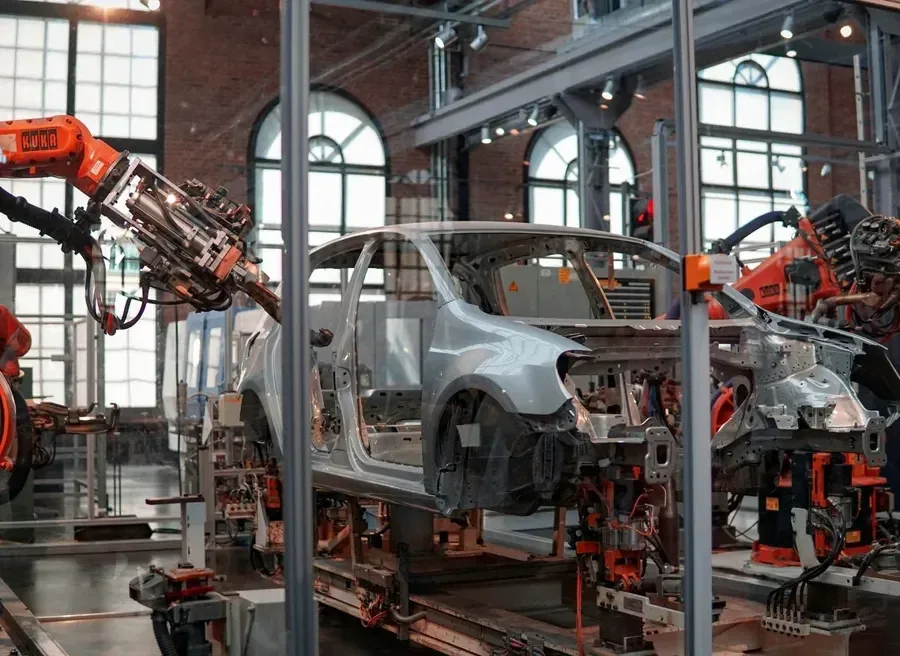
Industrial robots are the welding and assembly arms in the photo at the top of this post. The robots that move pallets and totes around a warehouse are counted separately as professional service robots. IFR's service robot report, released October 7, 2025, counted almost 200,000 sold in 2024, up 9 percent. Of those, 102,900 units, up 14 percent, were built for transportation and logistics, more than any other application, mostly mobile robots moving goods indoors. Robots-as-a-service fleets grew 31 percent overall and 42 percent in transportation.
AS/RS and AGVs: The Pallet Movers
Two technologies touch the pallet with no human in the loop. Automated storage and retrieval systems, a $9.86 billion market in 2025 heading to $14.80 billion by 2030 at 8.5 percent a year in MarketsandMarkets' estimate, with unit-load systems and the automotive sector expected to hold significant shares. And automatic guided vehicles, including the fork AGVs that 42 percent of Pallet Report respondents already run. A stacker crane sets a pallet down on rails sized to a specification; a fork AGV finds the pallet openings by sensor. Neither one eyeballs anything. Interact Analysis trimmed its AGV conveyor forecast from 6 percent to 4 percent annual growth in 2025 while projecting about 30 percent growth for person-to-goods robots through 2030, so the mix is shifting toward smaller robots working alongside people.
Brambles, the world's largest pallet pooler, told investors in its FY25 results that it sees increasing demand for its quality platforms driven by supply chain automation, alongside reduced availability and rising cost of quality whitewood pallets. When the pooler says automation is raising the bar on pallet quality, believe it.
Warehouse Labor Costs and Shortages
Automation is sold on labor, so here is the labor data from the Bureau of Labor Statistics. Warehousing and storage employed 1,831,800 people in September 2026 on preliminary figures, and average hourly earnings in the industry were $26.74 in August 2026, not seasonally adjusted, on a 40.7-hour week. The Job Openings and Labor Turnover Survey counted 338,000 open positions in transportation, warehousing and utilities in August 2026, up 24,000 in a month, out of 7,079,000 openings across the economy. Hand laborers and material movers, the occupation that physically touches the pallet, held 6,917,800 jobs in 2025 at a median wage of $18.38 an hour, or $38,220 a year. BLS projects 4 percent growth for that occupation through 2035 and about 904,200 openings a year, most of them replacing people who leave.
Nine hundred thousand openings a year for the job of lifting things is the clearest statistic in warehouse automation. The work is not going away; the people are. The hidden part is that a robot does not replace the labor of a handoff, it replaces the judgment. A forklift driver sees a warped deck board and compensates. A shuttle does not.
Warehouse Automation ROI and the Cost of Downtime
Payback claims for warehouse automation are everywhere and almost none come from a study you can open, so we do not repeat them here. The honest answer depends on labor rates, throughput and how often the system stops. What the surveys do measure is how buyers weigh the decision: in Peerless Research Group's 2026 study, 77 percent rated total cost of ownership, ROI and maintenance cost as very important, 74 percent parts availability and obsolescence risk, 68 percent integration and 59 percent scalability.
The ROI number that can be checked is the one on the other side of the ledger: what an hour of unplanned downtime costs. Siemens' True Cost of Downtime 2024 report, built on 181 interviews at large industrial organizations and Senseye predictive maintenance data, estimates that the world's 500 largest companies lose almost $1.4 trillion a year to unplanned downtime, 11 percent of their revenue. An hour of downtime costs $36,000 in fast-moving consumer goods and $2.3 million in automotive, more than $600 a second. The average large plant suffers 25 downtime incidents a month, down from 42 in 2019, and loses 27 hours a month, down from 39.
Two details matter for warehouses. Consumer goods is the exception to the improvement: the only sector where hours lost did not fall since 2019, with annual downtime cost per plant doubling to just over $10 million. And the cost of an hour rose 113 percent in automotive and 319 percent in heavy industry against 19 percent U.S. inflation, because tightly coupled automated lines make every stoppage ripple further. The more you automate, the more each stop costs. That is the math most payback calculators leave out.
Watch Out
A payback model that assumes the system runs is not a payback model. Build the downtime line from Siemens' $36,000 an hour, multiply by your stoppage count, and see how many of those stops have a pallet at the bottom of them.
What Automation Demands of Pallets
Now the part the market reports skip. Automated systems assume the thing entering them is the same every time. The best survey data on what happens when it is not comes from the Pallet Report, Peerless Research Group's annual study for Modern Materials Handling and Logistics Management. In the 2019 edition, with 259 respondents, 53 percent said they deal with poor quality or bottom boards resulting in jams or faults in their storage equipment daily or weekly, and 21 percent said loose or broken components get caught in rollers that often. Other causes: missing or damaged components causing improper unit load placement, excessive deflection and inconsistent dimensions. Only 23 percent of those respondents ran automated storage at the time. Note the year: the figure comes from the 2019 report, and we have not found a newer published jam-frequency number, which is itself telling.
The newer Pallet Reports show the market responding. In 2025, 89 percent of facilities said they want pallet specifications. In 2026, 92 percent still used wood but plastic use jumped to 36 percent from 28 percent, used pallet quality complaints doubled to 37 percent from 18 percent, and companies planning to use more plastic cited compliance, cleanliness and safety (28 percent), durability (26 percent) and sustainability (18 percent). PalletOne, a wood pallet manufacturer, walked a wood pallet through an AS/RS in a December 2024 article and listed what fails at induction: warped pallets, protruding nails that scrape sensors, deflection, broken boards and misalignment, at direct downtime costs of thousands of dollars per hour. It quotes an AS/RS sales executive, and the line is the one we keep repeating: automation loves consistency.
| Pallet defect | What the automation does | Source |
|---|---|---|
| Missing or damaged bottom board | Jam or fault at conveyor, shuttle or crane; load rejected | Pallet Report, 2019 |
| Non-flat or warped deck | Misread at induction, misaligned placement in rack | Pallet Report, 2019; PalletOne, 2024 |
| Inconsistent dimensions | Fails dimension check; wrong fit on rails and supports | Pallet Report, 2019 |
| Excessive deflection under load | Sag fouls shuttle clearance; failed retrieval | Pallet Report, 2019; PalletOne, 2024 |
| Protruding nails, loose boards | Scrape sensors, catch in rollers, debris on floor | Pallet Report, 2019; PalletOne, 2024 |
The Tolerance Problem in One Comparison
Standard wood pallets carry dimensional variance of 8 to 10 percent, because wood absorbs moisture, swells, shrinks and loses boards with every trip. APS pallets are molded from 100 percent recycled HDPE and hold their dimensions to under 1 percent, trip after trip, the tolerance shuttles, cranes and fork AGVs were built to expect. They match wood in load-bearing capacity, have no nails to scrape a sensor or boards to drop into a roller bed, and they can be pressure-washed. The detail is on Why Plastic.
- The Pallet Reports Its Own Jams Every APS pallet carries an embedded sensor module with cellular GPS, shock and dwell reporting. A pallet that stops moving where it should be moving shows up in Pulse as an exception, with a time and a location, before the line supervisor hears about it.
What the Numbers Mean for an Automation Program
Line the statistics up. The market is $26 billion to $30 billion and growing 14 to 16 percent a year. Fewer than one operation in ten calls itself highly automated. The fastest-selling robots, mobile robots and AS/RS, handle pallets without a person's judgment in the loop. The labor they replace is 904,200 openings a year that nobody can fill. The downtime they create when they stop is $36,000 an hour in consumer goods and climbing faster than inflation. And the most-cited published survey on the subject says more than half of operations fight pallet-caused jams every week.
Read together, those numbers say the pallet is a specification in your automation program whether or not anyone wrote it down. The 89 percent asking for pallet specs have started acting on it. The gap is between the capital line, where the robots live, and the packaging line, where the pallet lives, which is why the pallet in our earlier post keeps costing more than anyone thinks.
- Spec the Pallet Like a Component Write dimensional tolerance, deflection and condition into the automation program the way you would for a tote or a rack beam. Most of the market wants this and most of it has not done it.
- Price the Downtime, Not the Pallet A wood pallet is cheap until it stops a line. Use the Siemens hourly figures and your own stoppage log to put a number on pallet-caused downtime, then compare it to the premium for a pallet that does not cause it. Our Savings calculator will do the first pass.
- Lease the Consistency APS runs closed-loop leasing programs designed to price at or below a conventional wood pallet program, so the automation-grade pallet does not have to win a capital approval. One flat monthly cost covers the pallet, the sensors and the exception reporting.
Warehouse automation is a bet that consistency scales. The pallet is the one input most companies have not yet made consistent. If you are planning or expanding an automated operation and want to see what a dimensionally consistent, sector-specific tracked fleet would do to your jam count, tell us your lanes, volumes and systems and an APS expert will come back with a program scoped to your operation. Click Let's Talk.
Sources
- Global Market Insights, “Warehouse Automation Market Size & Share, 2025 to 2034,” March 2025
- Mordor Intelligence, “Warehouse Automation Market Size, Share & Trends,” 2026
- MarketsandMarkets via PR Newswire, “Automated Storage and Retrieval System Market Worth $14.80 Billion in 2030,” January 31, 2025
- Logistics Management, “Interact Analysis bumps up its warehouse automation market forecast,” January 13, 2026
- The Robot Report, “Interact Analysis slashes mobile robot outlook amid tariff uncertainty,” July 10, 2025
- International Federation of Robotics, “World Robotics 2025: Industrial Robots,” September 25, 2025
- International Federation of Robotics, “World Robotics 2025: Service Robots,” October 7, 2025
- Logistics Management / Peerless Research Group, “2025 Automation Survey: Diving deep into the warehouse automation trends,” February 1, 2025
- Modern Materials Handling / Peerless Research Group, “2026 Automation Study: Warehouse automation ticks upward,” January 1, 2026
- Logistics Management / Peerless Research Group, “The Pallet Report 2025: From Cheez-Its to auto parts, pallets matter,” September 1, 2025
- Modern Materials Handling / Peerless Research Group, “The Pallet Report: Familiar pallet setups, changing priorities,” October 1, 2026
- Logistics Management / Peerless Research Group, “The Pallet Report: State of the pallet industry,” September 1, 2019
- PalletOne, “Following a Wood Pallet Through an AS/RS System: Why Quality Matters,” December 20, 2024
- Siemens, “The True Cost of Downtime 2024,” 2024
- U.S. Bureau of Labor Statistics, “Industries at a Glance: Warehousing and Storage (NAICS 493),” 2026
- U.S. Bureau of Labor Statistics, “Job Openings and Labor Turnover Survey, Table 1,” September 29, 2026
- U.S. Bureau of Labor Statistics, “Occupational Outlook Handbook: Hand Laborers and Material Movers,” 2026
- Brambles, “FY25 Results Presentation,” August 2025
FAQ
How Big Is the Warehouse Automation Market?
It depends on the research firm's boundary. Global Market Insights valued it at $26.5 billion in 2024 with 15.9 percent annual growth to $115.8 billion by 2034. Mordor Intelligence puts it at $29.98 billion in 2025 and $65.74 billion by 2031. Interact Analysis saw 7 percent order intake growth in 2025. All agree on strong growth; they disagree on what counts as warehouse automation.
What Percentage of Warehouses Are Automated?
Far fewer than the market size suggests. In Peerless Research Group's 2025 study for Modern Materials Handling, 52 percent of fulfillment operations were mostly or entirely manual, 42 percent mixed and 4 percent highly automated. In the 2026 study, labeling was fully automated in 24 percent of operations, storage in 11 percent and retrieval in 3 percent. Most warehouses are hybrids where robots and people hand pallets back and forth.
What Is the Difference Between an AGV and an AMR in a Warehouse?
An automatic guided vehicle follows a fixed path, such as a magnetic strip or reflector route, and stops when something is in the way. An autonomous mobile robot navigates by map and sensors and plans its own path around obstacles. Fork AGVs, which 42 percent of Pallet Report respondents run, find pallets by sensing the fork openings, so they depend on consistent pallet dimensions just as an AS/RS does. IFR counted 102,900 service robots sold for transportation and logistics in 2024, most of them mobile robots of one type or the other.
What Kind of Pallet Does an AS/RS Require?
A dimensionally consistent one. Automated storage and retrieval systems check pallet dimensions, alignment and weight at induction and reject what fails, and the Pallet Report found 53 percent of companies deal with pallet-caused jams or faults daily or weekly, mostly from damaged bottom boards, non-flat decks and inconsistent dimensions. Molded plastic pallets such as APS's recycled HDPE pallets hold dimensions to under 1 percent versus 8 to 10 percent for wood and have no nails or loose boards to foul sensors and rollers.
How Much Does Warehouse Downtime Cost per Hour?
Siemens' True Cost of Downtime 2024 report puts an hour of unplanned downtime at $36,000 in fast-moving consumer goods and $2.3 million in automotive, with the world's 500 largest companies losing about $1.4 trillion a year, or 11 percent of revenue. For a warehouse the right number is your own stoppage count multiplied by your sector's hourly cost, and a surprising share of stoppages on automated lines trace back to the pallet.
Featured Posts From the APS Blog
The Pallet Is Costing You More Than You Think
You have invested millions in automation and you track labor, freight and energy to the decimal. Somewhere on your dock, a wooden pallet is about to stop the line.
 Rodrigo CastroCo-Founder & President10 min read
Stuck in the 20th Century: Neil Armstrong, iPhones, and Pallets
80% of global goods touch a pallet at some point. How can an asset that fundamental to modern trade have changed so little since 1969?
Rodrigo CastroCo-Founder & President3 min read
What RFID Pallet Tracking Actually Tells You (And What It Doesn't)
What gets packaged and sold as smart pallet technology is, in most cases, a ten-cent sticker on a rickety wooden pallet. Here is what passive RFID can and cannot see.
Rodrigo CastroCo-Founder & President5 min read