
Food Traceability Statistics: Recalls, Lot Tracking & Compliance Gaps
U.S. regulators announced 320 food recalls in 2025, yet more than half of outbreak illnesses came from outbreaks that never produced one. Here is what the data says about recalls, lot tracking and how ready the industry is for FSMA 204.
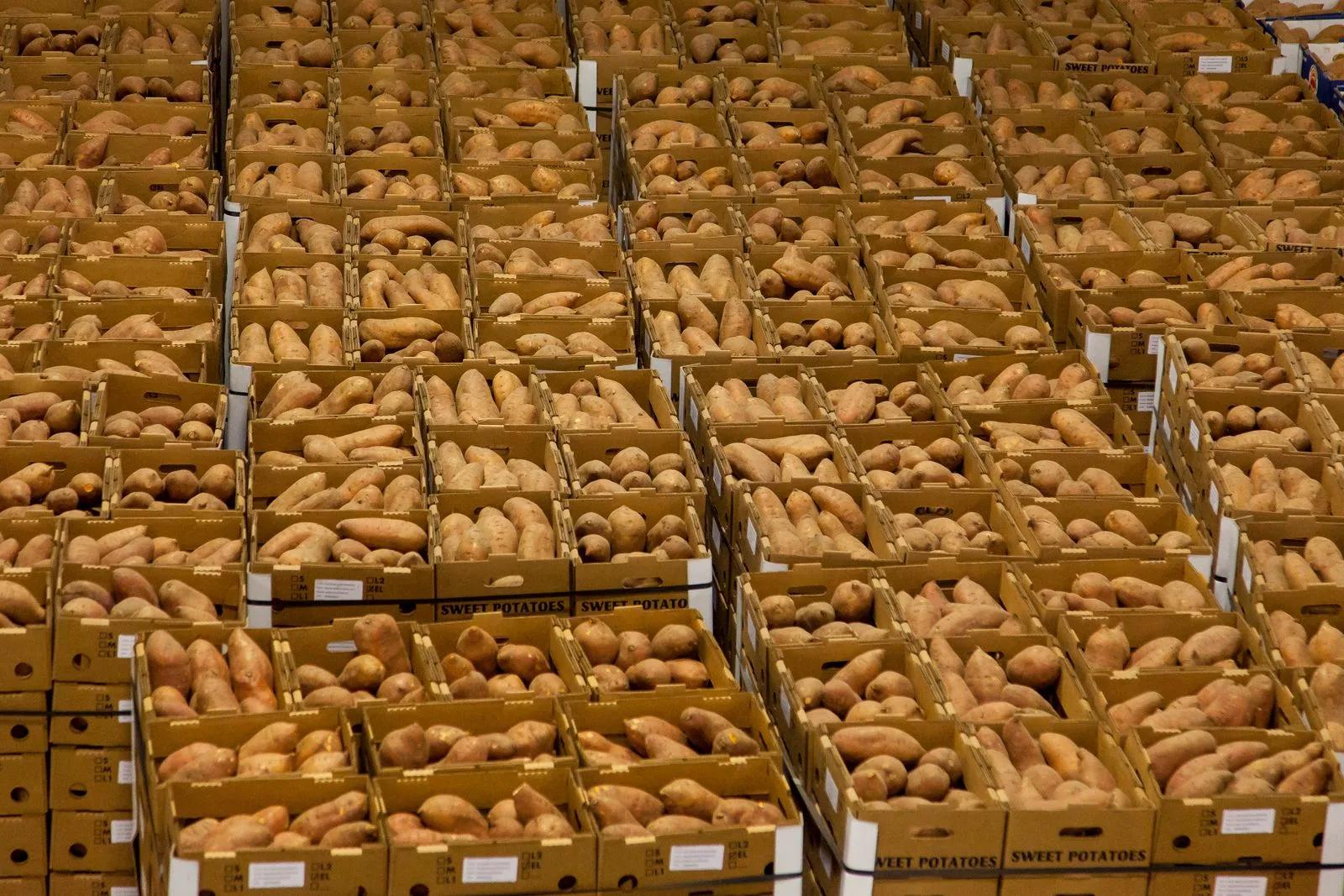
Key findings
- U.S. PIRG Education Fund counted 320 food recall announcements in 2025, up from 296. Undeclared allergens caused 39 percent and pathogens 34 percent.
- Of 28 foodborne outbreaks FDA and CDC investigated in 2025, PIRG found only 11 led to a recall, and 52 percent of outbreak illnesses came from outbreaks with no recall at all.
- In three romaine E. coli tracebacks, the one time investigators had a lot code, they found the whole supply chain in 24 hours or less. Without lot codes it took 5 to 25 days.
- FDA's 2026 tabletop exercises found the traceability lot code properly assigned across every tracking event in just 40 percent of participants' records.
- FDA proposed moving the FSMA 204 compliance date from January 20, 2026 to July 20, 2028, and Congress, in P.L. 119-37, directed FDA not to enforce it before then.
Picture a cold storage dock at six in the morning. Sweet potatoes come off one truck, a mixed pallet of herbs and cut fruit goes onto another, and somewhere in the paperwork sits the one number that matters if anyone gets sick next month: the lot code. Nobody on the dock is thinking about it. Everybody in a recall will be.
That is where these food traceability statistics keep landing. Recalls get the headlines, yet the expensive question is always the same one: which lot, and where did it go? Answer it fast and a recall stays narrow. Answer it slowly and a single farm's problem becomes a whole category's problem.
Food Recall Statistics
Start with the count. U.S. PIRG Education Fund's Food for Thought 2026 report, which analyzes FDA and USDA announcements, counted 320 food recall announcements in 2025, up from 296 in 2024. FDA recalls rose 5 percent, from 241 to 253. USDA recalls climbed faster, 22 percent, from 55 to 67.
FDA's enforcement database counts differently, logging each product separately, so one food recall can produce dozens of entries. Our own tally of openFDA food enforcement data for recalls initiated in 2025 (data as of October 14, 2026, and still filling in) found 569 recall events covering 1,571 product entries. Of those events, 213 included a Class I product, the tier where FDA sees a reasonable probability of serious harm or death.
Those counts also hide what never became a recall. FDA and CDC investigated 28 foodborne outbreaks in 2025, PIRG reports, with 1,003 illnesses, 235 hospitalizations and 22 deaths. A food type was identified in only 15 of them. A recall followed in only 11. So 52 percent of outbreak illnesses were tied to outbreaks with no recall, as of PIRG's January 2026 cutoff.
Why It Matters
A recall is the success case: someone found the food. Most outbreak illnesses last year came from outbreaks that never got that far.
Recall Causes
Allergens, not pathogens, were the single largest cause. In PIRG's 2025 breakdown, undeclared allergens drove 39 percent of recalls and pathogens 34 percent. Milk alone appeared in 31 percent of allergen recalls, 40 of them, and foreign material recalls more than doubled, from 12 to 28.
What caused U.S. food recalls in 2025
Causes also spread differently. In our openFDA tally, recall events citing Listeria averaged 5.9 product entries each, against 2.0 for undeclared allergen events. A labeling error usually sits on one product line. A pathogen in a shared ingredient spreads to everything made with it. PIRG found that 10 recalls in 2025 cascaded into 31 more, and eight of those 10 involved foods on FDA's Food Traceability List.
Allergen recalls are mostly a labeling problem. Pathogen recalls are a traceability problem.
Recall Costs
The number everyone quotes is old. The line that a recall costs a food company about $10 million in direct costs comes from a joint Food Marketing Institute and Grocery Manufacturers Association study, as Food Safety Magazine reported in 2012. It is usually dated to GMA's 2011 Capturing Recall Costs survey of 36 companies, most of which put their Class I recall costs under $30 million. We could not find that report online. A 2023 International Fresh Produce Association survey of 12 produce companies found most under $1 million.
| Estimate | Source and year | What it measures |
|---|---|---|
| About $10M | FMI and GMA study, via Food Safety Magazine, 2012 | Average direct cost of a recall to a food company |
| Mostly under $30M | GMA, 2011, via IFPA, 2023 | Class I recall costs at 36 surveyed companies |
| Mostly under $1M | IFPA, 2023 | Class I recall costs at 12 produce companies |
| $276M to $343M | Spalding et al., AJAE, 2023 | Total societal loss, Nov 2018 romaine E. coli advisory |
| $74.7B a year | USDA ERS, 2023 dollars | Cost of foodborne illness in the U.S. |
Company costs are the small number. The November 2018 romaine E. coli advisory traced to a single farm, yet Spalding and colleagues estimated a total societal loss of $276 million to $343 million, and consumption of most romaine salads fell around 25 percent for up to 20 weeks. USDA's Economic Research Service puts foodborne illness at $74.7 billion a year in 2023 dollars, $17 billion of it nontyphoidal Salmonella.
FDA's own math ties those losses to traceability. In its analysis of the final rule, as summarized by GAO, FDA valued the non-health benefits, mainly avoiding overly broad recalls and market withdrawals, at $575 million a year. Volumes are not easing either: Sedgwick counted 37.2 million pounds of USDA food recalled in the first half of 2026.
Food Traceability Rule Timeline & Scope
FSMA 204 is the section of the Food Safety Modernization Act that told FDA to set tighter records rules for high-risk foods. The result is the food traceability rule, formally Requirements for Additional Traceability Records for Certain Foods, published November 21, 2022 and effective January 20, 2023. It covers foods on FDA's Food Traceability List, such as leafy greens, tomatoes, fresh herbs, shell eggs, soft cheeses and finfish, and the businesses that manufacture, process, pack or hold them, with exemptions.
Its core fits in a paragraph. At seven critical tracking events (harvesting, cooling, initial packing, first land-based receiving of seafood, shipping, receiving and transformation), a business records key data elements tied to a traceability lot code. It keeps those records for two years, and during an outbreak or recall it hands FDA an electronic sortable spreadsheet within 24 hours. The agency keeps the requirements, FAQs and current dates on its FDA additional traceability records rule page.
| Date | What happened |
|---|---|
| Nov 21, 2022 | Final rule published (87 FR 70910) |
| Jan 20, 2023 | Rule takes effect |
| Mar 20, 2025 | FDA announces it intends to extend the compliance date |
| Aug 7, 2025 | FDA proposes a 30-month extension to July 20, 2028 (still a proposed rule) |
| Nov 12, 2025 | Congress, in P.L. 119-37, bars FDA from using that act's funds to enforce the rule before July 20, 2028 |
| Jan 20, 2026 | Original compliance date passes without enforcement |
| Jun 15 and Nov 6, 2026 | FDA public meetings on lot-level traceability |
| Oct 9, 2026 | Draft enforcement policy for smaller retail food establishments and restaurants |
| Jul 20, 2028 | Proposed compliance date and end of the enforcement bar |
The October 2026 draft policy, which would apply only if finalized, restates the full exemption for retail food establishments and restaurants selling no more than $250,000 of food a year on a three-year average, adjusted for inflation. It says FDA intends to exercise enforcement discretion for those selling more than $250,000 but no more than $1 million.
Watch Out
Several dates in this table moved at least once, and the extension is still only proposed. Plan around July 20, 2028, the date Congress wrote into Section 780 of P.L. 119-37, and check FDA's page before you lock a project schedule.
The rule targets the foods that cause the most trouble. FDA counts about 800 foodborne illness outbreaks a year from all foods, about 200 of them from foods it covers, and nearly 770,000 illnesses a year tied to covered foods. Its benefit estimate for food traceability rests on an 83 percent cut in traceback time.
Exemptions take out a large share of businesses holding a small share of the food. FDA's final rule estimates that the small farm exemptions cover roughly 63 percent of produce farms but about 1 percent of covered sales. Small retailers and restaurants get their own carve-out.
Regulators want supply chain data beyond food safety too. We covered California's new supply chain rules separately, and the problem is the same: proving what happened to goods you no longer hold.
FSMA Compliance Readiness
The date moved because the industry said it wasn't ready. When FDA announced its intent to extend on March 20, 2025, it wrote: “Even those few entities who are well positioned to meet the final rule's requirements by January 2026 have expressed concern about the timeline, in part because of their reliance on receiving accurate data from their supply chain partners, who are not similarly situated.” The August 2025 proposed rule went further: very few of the businesses FDA heard from said they expected to comply by January 2026.
Vendor surveys put numbers on that worry. Trustwell's 2023 State of Traceability survey of nearly 200 food industry professionals found just over a third well prepared for FSMA 204 compliance, 25 percent mostly unprepared and about 9 percent unaware of the rule.
FDA's figures above use a 7 percent discount rate over 20 years. Its extension analysis priced the delay at about $1,188 million in benefits forgone, in present value, to save about $775 million in costs.
FDA's side is moving too. GAO reported in January 2026 that FDA had completed 41 of the 46 FSMA requirements GAO identified, with the product tracing system among the open items. In July 2026, FDA told GAO it had established that system.
Key Takeaway
Thirty extra months buys time to fix the data you exchange with partners. Even the firms FDA called well positioned worried about data from their partners, and your partners are on the same calendar you are.
Compliance also reaches the equipment the food rides on. Sanitary transport and export rules apply to pallets as much as to trailers, which we cover in our guide to food & pharma pallet compliance.
Lot Tracking Gaps
The strongest case for lot tracking comes from investigators. Irvin and colleagues, writing in the Journal of Food Protection in 2021, reviewed the tracebacks behind three Shiga toxin producing E. coli outbreaks linked to romaine in 2018 and 2019. Together those outbreaks caused 474 illnesses, 215 hospitalizations and five deaths.
Lot codes were missing at the point of service in every outbreak but one, where an ill person's intact package carried a code and the whole chain surfaced within a day. Without codes it took 5 to 25 days. On one leg, investigators worked back through about 12 production lots, 1.8 million pounds. On another, bills of lading listing P.O. boxes and residences cost 13 days to find the owner.
Part of the trouble is that a lot means different things in different buildings. FDA's final rule preamble says a firm could define a lot as a case, a pallet, a day's production or some other amount, and the rule does not require case-level tracking. It does not let a distributor keep records that blur different traceability lots on the same pallet.
- Mixed Pallets Are Normal At FDA's June 15, 2026 public meeting, Jessica Marino of Four Seasons Produce said that for a cold storage distributor, mixed pallets are the everyday reality and not the exception.
- Codes That Stop at the Dock A receiver who logs the shipment but not the lot code leaves investigators an invoice and a phone number.
- Restaurants Start From Receipts Point of service data often lacks a lot code, which is where the 5 to 25 day tracebacks began.
Product Traceability Technology Adoption
Money is flowing into product traceability, though forecasters disagree on how much. BCC Research (March 2025) sized the food traceability technologies market at $23.8 billion in 2024, rising to $38.5 billion by 2029 at 10.1 percent a year. IMARC puts it at $23.3 billion in 2025 and $44.6 billion by 2034, 7.45 percent a year. Both are projections on different definitions, so trust the direction more than the totals.
Spending does not guarantee data quality, and most firms will not rip out a warehouse system to get there. We laid out a layered approach in visibility without replacing your WMS.
Food Traceability Software
Spreadsheets still carry a big share of the industry. Trustwell's 2025 State of the Food Technology Stack survey of more than 300 food and beverage professionals, another vendor study, found nearly 40 percent rely on spreadsheets as a core part of their stack, rising to over 70 percent at companies with 11 to 50 employees. Asked how satisfied they were with tools for supply chain visibility, respondents rated spreadsheets 2.62 out of 5 and standalone software 4.0.
Satisfaction with supply chain visibility tools, out of 5
So why not switch? Lack of integration was the biggest barrier to adopting new tools, cited by 34.6 percent of respondents. FDA's tabletop exercises point the same way: participants used everything from paper invoices to WMS and ERP platforms, RFID and GS1 barcodes, and what separated the fast chains was coordination between trading partners more than any one tool.
Key Data Elements Capture
Key data elements are the fields required at each event. Shipping alone has eight under 21 CFR 1.1340: the traceability lot code, quantity and unit of measure, product description, the ship-to and ship-from locations, the ship date, the traceability lot code source or its reference, and the reference document type and number. Seven of them must travel to the receiver.
FDA ran tabletop exercises with 15 companies across six supply chain scenarios between March 9 and April 1, 2026, and released the report on June 10. FDA warns the sample was small and not representative, the requests were simpler than a real outbreak, compliance was not yet required and several scenarios never reached the lot code source, so the findings cannot be generalized.
Share of participants' records capturing each element
Most firms still sent records within the 24-hour window. In at least two cases, retailers and restaurants that coordinated with their suppliers compressed what FDA said might have taken 48 to 96 hours or longer into a single day.
Key Takeaway
Presence is easy and correctness is hard. A lot code in 80 percent of records sounds fine until you see that 40 percent got it right at every step, and an investigation follows every step.
Supply Chain Traceability at the Pallet Level
We should be careful here, because this part is our business. FSMA 204 is a lot-level rule. The record that matters is the traceability lot code and the key data elements attached to it, and no pallet, ours included, replaces that. The lot code stays the unit FDA traces. The statute also bars FDA from requiring case-level tracking, as Congress restated in P.L. 119-37.
What a pallet can supply is the context around the lot. Supply chain traceability needs to know when a shipment left, where it went, who held it and for how long, the shipping and receiving moments the rule cares about.
- Timestamped Handoffs Our Pulse platform logs a timestamped, geolocated event when an APS pallet moves, which builds an independent chain of custody at every handoff.
- Dwell Time Dwell time by facility and lane shows where product sat, which matters for perishable produce even when the lot code is perfect.
- Condition The embedded sensor module, built into the pallet and not bolted on, records temperature, humidity and shock alongside cellular GPS location.
- Exceptions Only Pulse stays quiet when conditions are normal and flags the event that crosses a threshold. The silence is data too.
Smart Pallets don't fix a lot code typed wrong at a transformation step, the gap FDA's tabletop exposed. They address the hours between handoffs, when the only record is a bill of lading. Bad shipping addresses cost the romaine investigators 13 days on one leg. A timestamped, geolocated handoff record from the pallet itself gives you custody and condition data for GDP and FSMA records, alongside the lot code, not instead of it.
RFID tags on APS pallets support in-DC scanning workflows, which is useful and also limited, as we explained in what RFID pallet tracking actually tells you. See how our Smart Pallet technology works: an all-inclusive monthly lease designed to price at or below a wood pallet program, in a closed loop with 100 percent retrieval capability.
The lot code says what the food is. The pallet can say where it has been.
Food Grade Pallets & Hygiene
Traceability and sanitation meet at the pallet. Under FDA's Sanitary Transportation rule, pallets count as transportation equipment, which must be adequately cleanable for its intended use and kept in sanitary condition. The rule doesn't define food grade pallets. Its test is whether a pallet can be cleaned and is kept clean.
The best-known contamination test is small and old, so read it that way. In 2010 the National Consumers League, a consumer advocacy group, swabbed 140 pallets, 70 wood and 70 plastic, in Houston and Miami/Tampa. NCL itself called it exploratory testing of a small number of pallets.
Plastic was not spotless: about a fifth of plastic pallets had high aerobic plate counts, against about a third of wood. In raw counts that is seven wood pallets with E. coli against one plastic. Treat a test of 140 pallets as a signal, never a national rate.
Our pallets are 100 percent recycled HDPE: non-porous, moisture and pest resistant, with no nails and no splinters, and they can be sprayed down or pressure-washed between trips. They are ISPM 15 exempt, so export loads need no heat treatment or fumigation. Read why we build in plastic, or see our food grade pallets for food brands.
A pallet you can wash is one less thing to explain in an audit.
Food Traceability FAQ
What Does the Food Traceability Rule Require?
Businesses that manufacture, process, pack or hold foods on FDA's Food Traceability List must keep key data elements tied to traceability lot codes at seven critical tracking events, including shipping, receiving and transformation. Records are kept for two years, and during an outbreak or recall FDA can ask for an electronic sortable spreadsheet within 24 hours. Small farms, small retailers and some other businesses are fully or partly exempt.
How Much Does a Food Recall Cost?
The most quoted figure, about $10 million in direct costs per recall, comes from a Food Marketing Institute and Grocery Manufacturers Association study usually dated to 2011, so it is roughly 15 years old. A 2023 IFPA survey of 12 produce companies found most Class I recalls cost under $1 million. Market-wide losses run far higher: the November 2018 romaine E. coli advisory cost an estimated $276 million to $343 million.
When Is the FDA Traceability Deadline?
The original compliance date was January 20, 2026. FDA proposed a 30-month extension to July 20, 2028 in August 2025, and in November 2025 Congress, in P.L. 119-37, directed FDA not to enforce the rule before that date, and FDA says it intends to comply. As of October 2026 the extension is still a proposed rule, so check FDA's rule page for updates.
Sources
- U.S. PIRG Education Fund, Food for Thought 2026, 2026
- FDA, openFDA Food Enforcement Reports API (recalls initiated in 2025, data as of Oct 14, 2026)
- FDA, Requirements for Additional Traceability Records for Certain Foods, final rule, Federal Register, 2022
- FDA, Requirements for Additional Traceability Records for Certain Foods, Compliance Date Extension, proposed rule, Federal Register, 2025
- U.S. Congress, Public Law 119-37, Continuing Appropriations, Agriculture, Legislative Branch, Military Construction and Veterans Affairs, and Extensions Act, 2026, Sec. 780, November 12, 2025
- FDA, draft enforcement policy for certain retail food establishments and restaurants, Federal Register, 2026
- FDA, Challenges and Solutions in Lot-Level Food Traceability public meeting notice, Federal Register, 2026
- FDA, FSMA Final Rule on Requirements for Additional Traceability Records for Certain Foods, page updated October 2026
- FDA, Food Traceability List, 2026
- FDA, constituent update on extending the Food Traceability Rule compliance date, March 20, 2025
- FDA, traceability readiness tabletop exercises report, 2026
- FDA, constituent update on the tabletop exercises report and updated FAQs, June 10, 2026
- FDA, public meeting transcript on lot-level food traceability, June 15, 2026
- eCFR, 21 CFR 1.1340, Shipping records, 2026
- eCFR, 21 CFR 1.1455, Record availability and retention, 2026
- eCFR, 21 CFR Part 1 Subpart O, Sanitary Transportation of Human and Animal Food, 2026
- GAO, report GAO-24-106563 on FDA's food traceability rule, 2024
- GAO, FSMA implementation report (GAO-26-107394), 2026
- Irvin et al., romaine STEC outbreak tracebacks, Journal of Food Protection, 2021
- Trustwell, 2023 State of Traceability Report, 2023 (vendor survey)
- Trustwell, 2025 State of the Food Technology Stack survey, 2025 (vendor survey)
- BCC Research, food traceability technologies markets report, 2025
- IMARC Group, global food traceability market report
- International Fresh Produce Association, recall survey synopsis comparing the 2011 GMA study, 2023
- Food Safety Magazine, Recall: The Food Industry's Biggest Threat to Profitability, 2012 (citing an FMI and GMA study)
- Spalding et al., E. coli in the romaine lettuce industry, American Journal of Agricultural Economics, 2023
- AAEA, press release on E. coli in the romaine lettuce industry, 2023
- USDA Economic Research Service, Cost Estimates of Foodborne Illnesses, updated 2026
- Sedgwick, recall index, first half 2026
- National Consumers League, pallet contamination test results, 2010
Featured Posts From the APS Blog
California Just Changed the Rules. Is Your Supply Chain Ready?
Thirty-seven countries already require large companies to disclose their carbon footprints. The United States has been the holdout, and that is changing fast.
 Rodrigo CastroCo-Founder & President4 min read
What RFID Pallet Tracking Actually Tells You (And What It Doesn't)
What gets packaged and sold as smart pallet technology is, in most cases, a ten-cent sticker on a rickety wooden pallet. Here is what passive RFID can and cannot see.
Rodrigo CastroCo-Founder & President5 min read
How a Viral Cargo Theft Made the Case for Smart Pallets
Cargo theft losses across the US and Canada surged 60% to nearly $725 million, with food and beverage hit hardest and automotive supply chains increasingly exposed.
Rodrigo CastroCo-Founder & President5 min read