
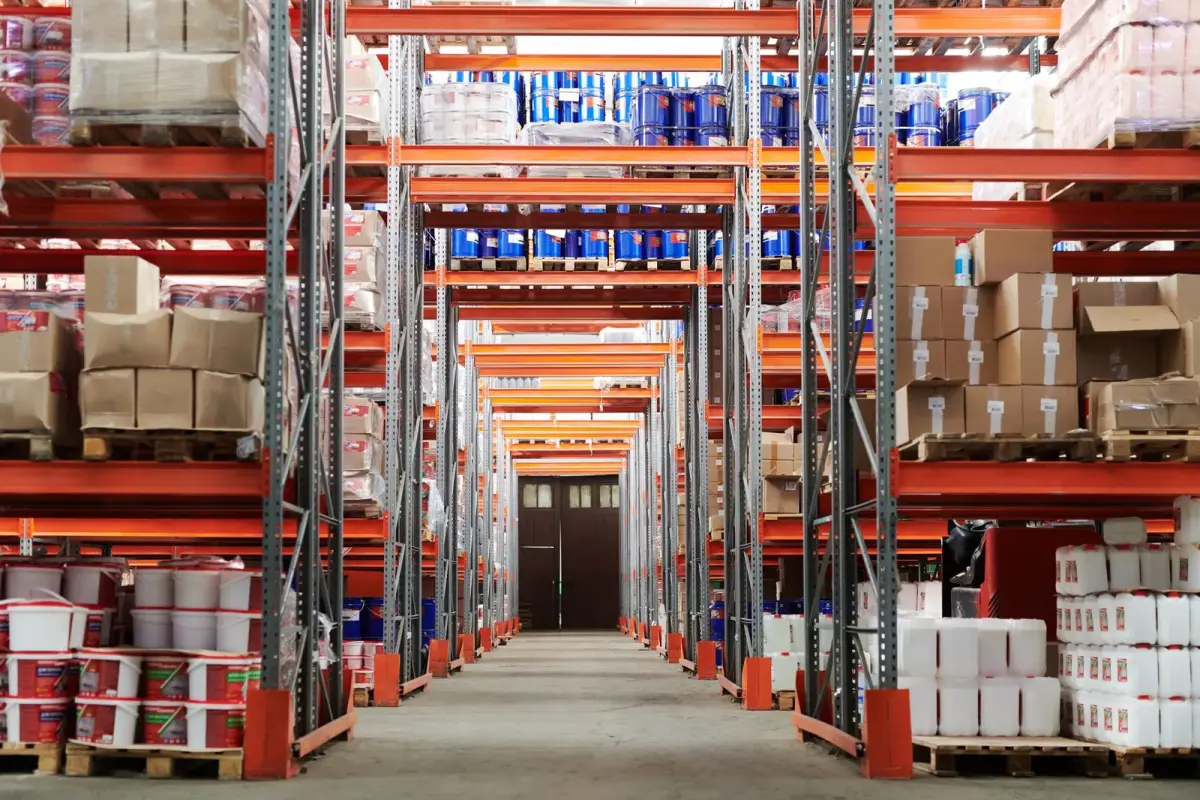
Picture the week after go-live. The integrator commissioned the system on clean, new pallets and the acceptance tests passed. Then the first trailer of mixed inbound pallets hit the dock. By Wednesday the profile check is sending loads to the reject lane, a shuttle has faulted on a sagging deck, and maintenance has started a spreadsheet called “bad pallets.”
This is the part of warehouse automation that rarely makes the business case. The robots, rack and software get specified to the millimeter. The pallet, the one object that touches all of them, often gets specified as “whatever shows up.”
This guide fixes that in seven steps, written for the operations leader sitting across the table from an integrator. We will be fair to wood where it earns it, and tell you where Smart Pallets fit at the end.
Key Takeaways
- Integrators name the same culprits: Swisslog and Dematic both single out broken bottom boards as a leading cause of pallet faults in automated systems, and both flag excessive deflection.
- Write the pallet spec with your integrator before commissioning: footprint tolerance, deflection at your rack span, bottom deck layout, entry clearance, temperature range and labels.
- ISO 8611-1 says lab load tests do not replace field tests, so trial candidate pallets on your own loads, equipment and temperatures.
- Run pallets as a maintained fleet: inspect at induction, quarantine every reject and track faults by pallet source.
- Measure pallet-caused faults per 1,000 inductions, reject rate and availability from day one.
Before You Start: What This Program Delivers
This program is for operations and supply chain leaders adding AS/RS, AGVs or AMRs, shuttles, conveyors or robotic palletizing. The outcome: a pallet specification your integrator has signed, a fleet that meets it, an inspection routine that keeps it that way, and metrics that show whether the pallet is costing you uptime. If you are still building the investment case, start with our warehouse automation statistics.
What You'll Need
- The Integrator's Pallet Assumptions Footprint, height, entry openings, bottom deck layout, deflection, overhang, weight and temperature. If the proposal is silent, that silence is your first finding.
- A Cross-Functional Team Operations, maintenance, quality, procurement and the integrator's project lead. Procurement controls which pallets arrive.
- Fleet and Inbound Data Pallet counts by source (owned, pooled, recycled, supplier) and any existing conveyor or lift truck fault logs.
- Measuring Tools Steel tape, straightedge, feeler gauges, a scale and a moisture meter for wood.
- Time Before Commissioning A pallet problem found during acceptance testing is cheap. One found after go-live is not.
Step 1: Map Every Place the Pallet Touches the System
Before you measure a pallet, list every machine that will touch one and which part of the pallet it touches. Different warehouse automation systems fail on different defects, so this map tells you what to measure in Step 2.
| Equipment | What It Touches | How a Bad Pallet Fails It |
|---|---|---|
| Roller conveyors | Bottom deck boards | Boards parallel to rollers drop between them |
| Chain conveyors | Bottom deck and runners | Broken bottom boards stop conveyance |
| AS/RS cranes and shuttles | Deck span on supports | Sag blocks the shuttle from getting under the load |
| Fork AGVs and AMRs | Entry openings and blocks | Undetected broken boards get the load pushed |
| Profile and ID stations | Whole pallet and load | Overhang, height, weight or broken boards trigger a reject |
The people who build these systems are specific. Cisco-Eagle says running boards “should never run parallel to the conveyor rollers” because they “can fall in between the rollers.” Dematic told Packaging Revolution that broken bottom boards can create faults “such as preventing the ability to convey a pallet.” Ralph Rupert, writing in Pallet Enterprise, notes that deflection “may prevent shuttle carts (that have low tolerance for variations) from getting under a load.”
AGV warehouse automation adds a wrinkle. Vetter, which makes fork sensors for automated trucks, warns that broken boards under a pallet must be detected, or “the AGV will push the pallet off the shelf, in the worst case scenario.” A driver sees a dangling board. A robot sees only what its sensors were set up to find.
Pro Tip
At each touchpoint, ask the integrator: what happens here when the pallet is out of spec? The answers become your reject criteria in Step 3 and your fault codes in Step 7.
Step 2: Audit Your Current Pallet Fleet
The audit answers one question: if today's pallets ran through tomorrow's system, how many would fail, and why? Sample every source that will feed automation (inbound supplier, pool, recycled and your own) at receiving, because what arrives on trucks is what hits the induction station.
The stakes are real. In the 2019 Pallet Report from Peerless Research Group, 53 percent of 259 respondents dealt with poor quality or bottom boards causing jams or faults in storage equipment daily or weekly.
What a Pallet Audit Measures
| Check | How to Measure | What to Record |
|---|---|---|
| Length and width | Tape at both ends of each side | Deviation from nominal |
| Squareness | Compare the two diagonals | Difference between diagonals |
| Entry openings | Tape at each fork opening | Clearance against the minimum |
| Flatness and warp | Straightedge and feeler gauge | Largest gap, top and bottom |
| Bottom deck boards | Visual and hand check | Missing, cracked or repaired boards |
| Fasteners | Visual and hand check | Nails standing proud |
| Moisture (wood) | Pin moisture meter | Moisture content |
Moisture is on the list because wood moves with it. The USDA Forest Products Laboratory's Wood Handbook explains that below fiber saturation (about 30 percent moisture content) wood swells and shrinks with moisture, which “can result in warping, checking, and splitting.” And Mecalux, an AS/RS maker, advises that automated warehouses “should only use recycled pallets when they meet strict dimensional and structural requirements (Grade A).”
Worked Example: What the Audit Number Means
Say 24 of 400 sampled pallets fail the integrator's criteria, a 6 percent defect rate, accurate to about plus or minus 2.3 points at 95 percent confidence. Here is what that looks like live.
| Assumption or Result | Value |
|---|---|
| Pallet inductions per day | 2,000 |
| Defective pallets at 6% | 120 |
| Caught at induction (90%) | 108 rejects |
| Restack labor at 10 minutes each | 18 hours a day |
| Defective pallets that slip through | 12 |
| Faults at 1 in 4, 15 minutes each | 3 faults, 45 minutes a day |
The inspection station does its job, and the price is more than two shifts of restacking labor a day. The pallet budget never sees it.
Watch Out
Audit by source, not as one blended number. A 6 percent average can hide one supplier at 1 percent and another at 20 percent.
Step 3: Write the Pallet Specification With Your Integrator
Every serious integrator has pallet assumptions. Get them out of the proposal appendix and into a one-page specification procurement, suppliers and receiving can work to. Alex Reed, a sales director at Swisslog Americas, told Packaging Revolution the company wants pallets “grade A (if possible) with their bottom boards and stringers intact,” and that recycled pallets work “if they meet the requirements and tolerances we lay out in our proposals.” Those tolerances are vendor specific, which is why yours must be written down.
Standards to Anchor the Spec
Two of those numbers measure different things. Under the ASTM D1185 test protocol, pallet deflection is limited to 1.9 percent of the greatest span, just over three quarters of an inch on supports 44 inches apart, as Ralph Rupert explains in Pallet Enterprise. L/180 applies to the steel rack beam, about half an inch on an 8 foot beam. Your integrator may set a tighter pallet limit than ASTM's, so ask. ANSI MH1, the U.S. pallet standard, covers terminology, sizes and sampling and inspection procedures, according to DC Velocity, and its 2016 edition includes a “Performance Specification for Pallets to be Used in Automated Unit-Load Material Handling Equipment.” Give both sides the current edition.
What the Spec Should Cover
- Footprint and Tolerance Nominal pallet dimensions, allowed deviation and allowed difference between diagonals.
- Entry Openings Minimum fork clearance for every lift device and shuttle.
- Bottom Deck Layout Board orientation relative to conveyor flow, and whether a perimeter base is required.
- Deflection at Your Span Maximum sag under your heaviest load at your actual pallet racking span.
- Load Ratings Static, dynamic and racking capacity; our plastic pallet guide explains the difference.
- Temperature, Load Envelope and Labels Every environment the pallet sees, the overhang, height and weight the profile check will enforce, and where labels or tags go.
Pro Tip
Ask every pallet supplier, wood or plastic, for dimensional and deflection data measured under your facility's conditions: the temperatures, humidity and dwell times your pallets will actually see. A figure measured at room temperature in someone else's lab is a starting point, not a spec.
Step 4: Test and Certify Pallets on Your Own Loads
A spec sheet tells you how a new pallet did in someone else's lab. ISO 8611-1, the international test standard for flat pallets, says it plainly: “specific tests for determining load capacity do not replace the value of conducting field tests on specific pallet designs.” Your system will run used pallets, under your loads, at your temperatures. Test that.
- Pick Candidates Every pallet type and source you intend to allow, including the worst inbound source you cannot avoid.
- Build Worst Case Loads Heaviest SKU, most uneven load, tallest stack the profile check allows.
- Run Every Touchpoint Send each pallet through the full route from Step 1, induction to outbound.
- Measure Sag in the Rack Leave loaded pallets on the real span for your longest expected dwell, then measure again.
- Repeat the Cycle Virginia Tech's Center for Packaging and Unit Load Design recommends a minimum of ten replicate tests on its FasTrack handling simulation.
- Log Every Event Record rejects, faults and manual interventions by pallet ID.
What good looks like: zero pallet-caused faults, deflection inside spec at the end of the dwell, and every candidate approved or rejected in writing. Keep a few approved pallets from each source as reference samples for when quality drifts.
Pro Tip
Run the trial during commissioning, while the integrator's team is on site. A fault diagnosed together in week two is a footnote; argued by email in month six, it is a dispute.
Step 5: Phase the Transition Without Stopping the Building
Few operations can swap every pallet in a weekend, and integrators already have a fallback. Swisslog uses “captive system pallets or support boards” when pallet quality is a concern, and Dematic said wooden GMA pallets are “often placed on system pallets or system boards to increase reliability.”
Read that again. The workaround for an unreliable pallet is a second pallet under it, which means another fleet to buy, store and recirculate.
| Approach | When It Fits | Trade-Off |
|---|---|---|
| Inbound pallets plus inspection | Clean sources, tolerant equipment | Rejects and restack labor rise with every bad load |
| Restack at receiving | Mixed inbound feeding an AS/RS | Dock labor and floor space |
| Captive system pallets | Very sensitive systems | A second fleet to manage |
| Dedicated closed-loop fleet | Repeat lanes between known sites | Needs a retrieval program |
Phase by flow, not by date. Start with the flow feeding the most sensitive equipment, usually AS/RS induction, then extend to conveyors and AGV routes. Write inbound pallet requirements into supplier routing guides early.
Watch Out
If approved and unapproved pallets share a stack, someone will put the wrong one on the conveyor. Separate them by color, label or location.
Step 6: Add Identification and Tracking
The system needs to know which pallet is in front of it. For load labels, the GS1 Logistic Label Guideline places pallet barcodes 400 to 800 millimeters from the base and at least 50 millimeters from any vertical edge, and recommends two labeled sides. To identify the pallet itself, GS1's Global Returnable Asset Identifier (GRAI) can be encoded “in a barcode or EPC/RFID tag” and, with a serial number, used “to manage regular maintenance and record repairs.” A serialized pallet carries its own fault history.
| Method | What It Tells You | Where It Stops |
|---|---|---|
| Barcode label | Which load or pallet, at a scan point | Needs line of sight; labels tear |
| RFID tag | Which pallet, at portals and stations | Only when a reader is in range |
| Embedded sensor | Location and condition between sites | Needs a platform to act on alerts |
Inside the building, barcodes and RFID tell the system which pallet it is handling. Neither tells you what happened on the truck or in the yard; we cover what RFID can and cannot see in detail. In a closed loop, sensor data from outside the four walls explains why a pallet arrived damaged.
Pro Tip
Make pallet ID a field in your fault log. A fault tied to an ID traces to a source and a repair history. A fault logged as “pallet issue” traces to nothing.
Step 7: Inspect, Quarantine and Maintain the Fleet
The fleet that passed the trial in March is not the fleet you will have in September. Boards crack, repairs vary, new sources creep in. The defense is a routine. Industrial Kinetics' pallet load profile check measures height, overhang on four sides, centering and weight, and routes non-compliant pallets “to a reject or correction area.” In an AS/RS case study published by MHI, ID stations reject pallets “due to broken boards on the pallet.”
Rules for the Quarantine Lane
- Tag Every Reject Pallet ID, source, defect and the station that caught it.
- Repair or Retire Set a rule per defect. Repeat structural failures are retired, not repaired.
- Re-Inspect Before Re-Entry No pallet goes back into automation on someone's say-so.
- Feed Sources Back Send monthly reject counts to suppliers and poolers, in numbers rather than anecdotes.
- Sample the Live Fleet Run a monthly sample through the Step 2 checklist so drift shows before faults do.
Watch Out
Repairs are where wood fleets drift. Mecalux singles out poor-quality repairs as a risk to conveyors and stacker cranes.
How to Measure Whether Your Pallet Fleet Is Ready
Warehouse automation technology produces plenty of data. The trick is isolating the pallet's share of downtime. Start from your Step 2 baseline and track these monthly.
| Metric | How to Calculate | What It Tells You |
|---|---|---|
| Pallet-caused faults | Pallet-coded faults per 1,000 inductions | Whether spec and inspection work |
| Induction reject rate | Rejected pallets / pallets presented | Inbound quality by source |
| Time to clear a fault | Average minutes from fault to restart | The cost of each escape |
| System availability | Uptime / scheduled operating time | Risk to the integrator's guarantee |
| Restack labor | Hours spent repalletizing | The hidden labor cost |
Availability matters because it is often what the integrator guaranteed. In the MHI case study, the integrator reports that the system “exceeded the 98% system availability guarantee.” If pallet faults are not coded separately, a pallet problem and a machine problem look identical on that scorecard.
Read the trend. Falling faults with rising rejects means inspection works and inbound sources need attention. Rising faults with flat rejects means defects are slipping past the gate.
Where APS Smart Pallets Fit in Warehouse Automation
Everything above works with any pallet. It gets much easier when the pallet does not change from trip to trip, and that is what our Smart Pallets are built for. They are automation ready, made from 100 percent recycled HDPE and dimensionally consistent to under 1 percent, against 8 to 10 percent variance for wood. They are non-porous and moisture resistant, with no nails and no splinters, and they match wood in load-bearing capacity. Hold that against the Step 2 checklist: the moisture readings and the nails standing proud come off the list, and the footprint you approve in Step 4 is the footprint that keeps coming back. More on our Why Plastic page.
Consistency also has to last. Our pallets run roughly 100 to 200 or more trips before recycling, against about 3 to 5 for white wood, so the fleet you certify stays in service far longer before it needs replacing.
Automation does not need a smarter workaround. It needs a pallet that shows up the same way every time.
Identification is built in. APS pallets carry RFID tags for in-DC scanning, and every pallet has an embedded sensor module with cellular GPS, temperature, humidity and shock. Pulse stays quiet when conditions are normal and flags the exception when a pallet moves, takes a shock or crosses a threshold, routing it to the right person. Step 7 gets a timestamped record of what happened before the pallet reached induction.
APS runs custom closed-loop leasing programs on an all-inclusive monthly lease designed to price at or below wood pallet programs, with no capital purchase and no replacement cost. We made the broader case in The Pallet Is Costing You More Than You Think, and Savings shows the program structure. Writing a pallet spec with an integrator now? Let's Talk.
Sources
- ISO, “ISO 6780:2003 Flat pallets for intercontinental materials handling, Principal dimensions and tolerances,” 2003 (iTeh preview)
- ISO, “ISO 8611-1:2025 Pallets for materials handling, Flat pallets, Part 1: Test methods,” 2025 (EVS store)
- MHI, “MH1:2016 Pallets, Slip Sheets and Other Bases for Unit Loads” (Standards.ie listing)
- DC Velocity, “Yes, we have standards,” 2007
- Pallet Enterprise, Ralph Rupert, “Keys to Understanding Pallet Performance: Strength, Stiffness and Durability,” 2011
- Damotech, “How to Deal with Pallet Rack Deflection,” 2024
- Packaging Revolution, Rick LeBlanc, “The Rise of Warehouse Automation and Implications for Pallet Quality,” 2024
- Pallet Enterprise, Rick LeBlanc, “Self-Driving Forklifts and Pallets: Don't Be Late to the Party,” 2019
- Vetter, “SmartFork AGVready” brochure
- Cisco-Eagle, “Powered Pallet Conveyor” product guidance on running board orientation
- Mecalux, “Pallet grades for recycled pallet quality,” 2026
- Industrial Kinetics, “Pallet Load Profile Check”
- MHI AS/RS Industry Group and viastore systems, “Home Furnishings Retailer Adds AS/RS With Flexibility to Handle Both Euro and Custom Pallets” (case study)
- GS1, “GS1 Logistic Label Guideline,” Release 1.3, 2019
- GS1, “Global Returnable Asset Identifier (GRAI)” executive summary, 2015
- USDA Forest Products Laboratory, “Wood Handbook, Chapter 4: Moisture Relations and Physical Properties of Wood,” 2021
- Virginia Tech Center for Packaging and Unit Load Design, “FasTrack Simulation”
- Logistics Management / Peerless Research Group, “The Pallet Report: State of the Pallet Industry,” 2019
FAQ
How Do You Prepare Pallets for Warehouse Automation?
Map every machine that touches the pallet, audit each pallet source against those touchpoints, and write a pallet specification with your integrator. Then trial pallets on your own loads, phase them in by flow, add identification, and run inspection and quarantine with faults tracked by pallet.
Can AGVs and Automated Forklifts Use Wood Pallets?
Yes. Seegrid told Pallet Enterprise its self-driving vehicles work with metal, plastic and wood pallets, and that the real problem is broken or poor condition wood pallets. AS/RS and shuttle systems are stricter; a Yale robotics executive said they have “extremely rigid pallet requirements.”
How Much Can a Pallet Deflect in Pallet Racking?
The ASTM D1185 test protocol limits pallet deflection to 1.9 percent of the greatest span, just over three quarters of an inch on supports 44 inches apart. Shuttle carts have little tolerance for sag, so your integrator may set a tighter limit; use the one written into your spec.
What Is a System Pallet in an Automated Warehouse?
A system pallet, also called a captive pallet, stays inside the automated system and carries the customer's pallet through it. Integrators use them when inbound pallet quality is unpredictable, at the cost of a second fleet to manage.
How Many Pallets Should You Sample in a Pallet Audit?
Sample each source separately at receiving. About 400 pallets estimates a defect rate near 6 percent to within roughly plus or minus 2.3 points at 95 percent confidence; smaller samples work if you accept a wider margin.
Featured Posts From the APS Blog
The Pallet Is Costing You More Than You Think
You have invested millions in automation and you track labor, freight and energy to the decimal. Somewhere on your dock, a wooden pallet is about to stop the line.
 Rodrigo CastroCo-Founder & President10 min read
What RFID Pallet Tracking Actually Tells You (And What It Doesn't)
What gets packaged and sold as smart pallet technology is, in most cases, a ten-cent sticker on a rickety wooden pallet. Here is what passive RFID can and cannot see.
Rodrigo CastroCo-Founder & President5 min read
Stuck in the 20th Century: Neil Armstrong, iPhones, and Pallets
80% of global goods touch a pallet at some point. How can an asset that fundamental to modern trade have changed so little since 1969?
Rodrigo CastroCo-Founder & President3 min read