
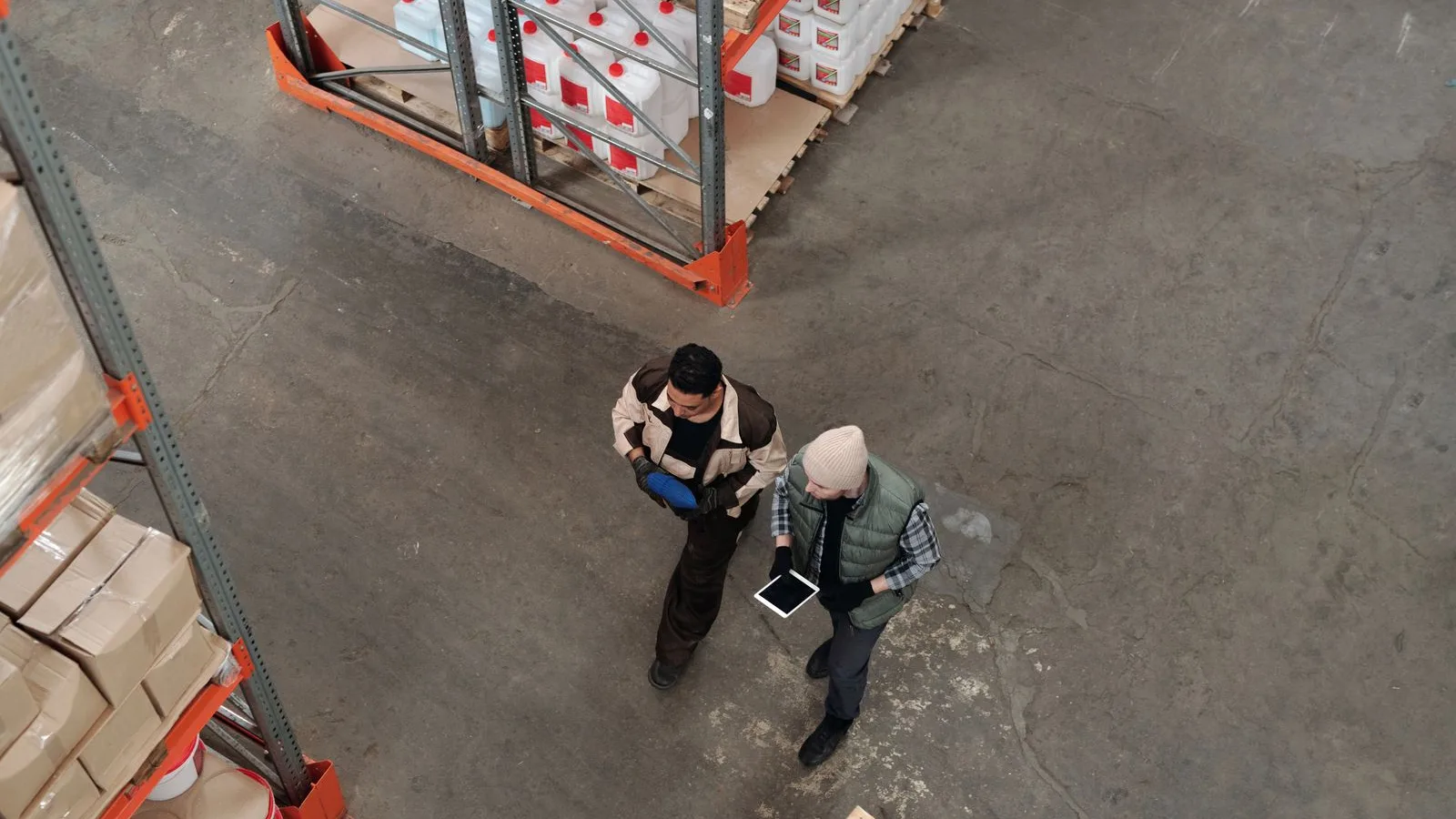
Verisk CargoNet counted 3,594 supply chain crime events across the United States and Canada in 2025, essentially the same as the 3,607 it counted in 2024. Estimated losses still rose 60 percent, to nearly $725 million, as organized groups went after higher value loads. The average theft reached $273,990.
Numbers like that land on a supply chain leader as a visibility question. Where was the load, who had it, and when should someone have known? Most visibility tools can answer the first question for the truck. The pallet, and the product sitting on it, are harder.
This guide sorts supply chain visibility into levels, tools, data sources and alerts, so you can see which tool answers which question and where each one goes dark. We build Smart Pallets that report by exception, so where our own product comes up, we say so.
Key Takeaways
- Visibility works at three levels: the shipment, the inventory record and the pallet that carries the goods. Most tools see one level well.
- Carrier data describes the truck. An electronic logging device must record the truck's location at least once an hour while it moves, and nothing in that record describes the product inside.
- A control tower is an operating model. Gartner analyst Christian Titze wrote in 2020 that there are no standardized requirements for one, and it can only act on the signals it receives.
- More alerts can mean less attention. The Joint Commission reported estimates that 85 to 99 percent of hospital alarm signals do not require clinical intervention. Every exception rule needs a threshold, an owner and a channel.
- APS Smart Pallets report by exception from inside the load, and Pulse routes each exception to the right person by push, email or SMS.
What Supply Chain Visibility Means
Supply chain visibility is the ability to see where your product and the assets carrying it are, what condition they are in and what just changed, soon enough to act. The last part is what separates visibility from record keeping. A report that tells you on Friday what went wrong on Tuesday is history.
So when someone on your team asks what is supply chain visibility, the honest answer depends on which question they need answered. GS1 US frames it around the product: "Real-time supply chain visibility allows you to have an in-depth look at the life cycle of a product along the supply chain." The GS1 standards behind that, shared product and location numbers plus the EPCIS event standard, give two companies' systems a shared way to name the same thing. GS1 US on visibility standards covers those identifiers.
In practice, every visibility question reduces to three.
- Where Is It The location of the load, the stock and the pallet, at the moment you ask or the moment it changed.
- What Condition Is It In Temperature, humidity and shock, and whether the load arrived the way it left.
- Who Needs to Know The one person who can act on a change, told while there is still time to act.
Surveys measure this unevenly, mostly at the supplier level. Our supply chain visibility statistics collect the numbers on supplier visibility and the cost of disruption. This guide is about the tools and the data.
Levels of Visibility From Order to Pallet
Visibility has levels, and each one answers a different question. Shipment visibility tells you where a load is and when it will arrive. Inventory visibility tells you what you hold and where it sits. Pallet visibility tells you what is happening to the goods themselves, at the unit where they are actually handled.
| Level | The Question | Usual Source | Where It Goes Dark |
|---|---|---|---|
| Shipment | Where is the load, and when will it arrive? | Carrier status messages and telematics | Inside the trailer, between updates |
| Inventory | What do we hold, and where? | WMS and ERP records, EDI inventory messages | Wherever the record and the shelf disagree |
| Asset & pallet | What is happening to the goods on this pallet? | RFID at read points, sensors in the pallet | Outside the loop the pallets travel |
Shipment Visibility
Shipment visibility follows the load from tender to delivery. The standard feed is the X12 214, which X12 describes as a message a carrier can use to give shippers, consignees and their agents "the status of shipments in terms of dates, times, locations, route, identifying numbers, and conveyance." Those statuses are milestones, sent when the carrier's system sends them.
Telematics adds a truck position. Under 49 CFR 395.26, an electronic logging device records the truck's location at each change of duty status, and makes an intermediate recording when the truck has been in motion for an hour with no other record. Transportation visibility platforms pull these carrier and telematics feeds into one view. Gartner defines that market as platforms that provide "real-time location and status insights into orders once they have left the warehouse."
The limit is built into the source. Every one of these feeds describes the truck or the order. None of them was designed to report what happened to the product on one pallet when the trailer door opened at a cross-dock.
Inventory Visibility
Inventory visibility is the record of what you hold, where and how much, across your own sites and your partners'. Inside your buildings it lives in the WMS. Between companies it moves as EDI. The X12 846 lets one location supply another with inventory information, and the 856 ship notice lists the contents of a shipment and how the goods are configured in the trailer.
The weak point is accuracy, because a record is what the system believes. In research summarized by Chicago Booth Review in 2002, Nicole DeHoratius, Ananth Raman and Zeynep Ton found that at one retailer more than 65 percent of inventory records were inaccurate, across nearly 240,000 items in 37 stores. The study is old and a store is not a DC, but the lesson travels. A record is only as good as the last time someone checked it against the shelf.
Asset & Pallet Visibility
Asset and pallet visibility is the level most programs skip. The pallet is the unit that gets picked, loaded, cross-docked and staged, so it is where handling happens. GS1's EPCIS standard builds this in: its event data covers the aggregation of items into cases, cases onto pallets and pallets into containers, so one pallet-level event can speak for every unit on it.
There are two ways to see a pallet. A read-point system such as passive RFID logs the pallet as it passes a reader at a dock door or a gate. A carried device travels with the pallet and reports from wherever it is. The first tells you a pallet crossed a door. The second can tell you what happened on the road between doors.
APS pallets carry both. RFID tags support in-DC and in-warehouse scanning workflows, alongside a sensor built into the pallet that reports over existing cellular and Bluetooth networks.
Supply Chain Visibility Tools
Most supply chain visibility tools fall into one of three groups. Software collects and displays events. A control tower organizes people and decisions around those events. Devices create the events in the first place. The order matters when you buy, because software can only show what a device or a partner reported.
| Tool | What It Sees | What It Needs | Where It Goes Dark |
|---|---|---|---|
| Transportation visibility platform | Load location, status and ETA | Carrier and telematics feeds | Product condition inside the trailer |
| WMS and ERP | Stock, orders, picks and receipts | Accurate scans and transactions | Anything outside your own buildings |
| Control tower | Events across lanes and partners | Integrated data and named owners | Wherever no source reports |
| Passive RFID | Tagged pallets passing a reader | Readers at every site | Everywhere between readers |
| Sensor in the pallet | Location and condition of the load | Pallets that cycle back | Pallets outside the closed loop |
For how these layers fit together and how to sequence the spending, see our supply chain technology guide. If your team has been told that visibility means a new WMS, our guide to improving visibility without replacing your WMS walks through the other path.
Supply Chain Visibility Software
Visibility software is the screen layer. It takes in carrier messages, telematics, partner files and device data, matches each event to an order or a load, and shows the result. The hard part is the matching. Every event has to carry, or map to, one shared reference such as the purchase order, the bill of lading or the pallet ID. Without it, the event lands as an orphan nobody acts on.
Three questions tell you more about supply chain visibility software than a feature list does.
- Unmatched Events What happens to an event that carries no reference the software recognizes, and who gets told?
- Conflicting Sources When the carrier feed and a device disagree about the same load, which one wins, and is the conflict shown?
- Write-Back Which fields go back into your WMS, TMS or ERP, and which system owns each one?
The Supply Chain Control Tower
A supply chain control tower is less a product than an operating model. In a 2020 piece for Supply Chain Dive, Gartner vice president analyst Christian Titze gave Gartner's definition: a concept combining people, process, data and organization, supported by a set of technology-enabled capabilities for transparency and coordination. He also wrote: "There are no standardized requirements or obligatory capabilities." Two vendors selling a control tower may be selling very different things.
Titze added that a control tower only makes sense once an organization has some cross-functional integration in place, internally and with business partners. Otherwise, in his words, "the tower won't be able to observe enough signals to support accurate decision-making." That is the practical limit. A control tower organizes the exceptions it can see. It cannot see inside a trailer that reports nothing.
Sensors & IoT Pallet Tracking
Sensors create the events everything above depends on. IoT pallet tracking puts a device on or in the pallet that records location and conditions such as temperature, humidity and shock, and sends them over a network instead of waiting for a reader at the door. Three design choices separate the options.
- Built In or Bolted On A GPS tracker added to a load has to be attached and set up to connect. A sensor built into the pallet arrives ready, with no extra steps.
- Readers or Networks Passive RFID records a pallet only where someone installed a reader. A cellular device reports over networks that already run along the route.
- Location or Condition An RFID read gives you an alert or a ping at a read point. Condition monitoring adds temperature, humidity and shock between those points.
None of this makes RFID the wrong choice for what it was built to do. It is very good at confirming which tagged pallets crossed which door, which is why APS pallets carry RFID tags as well. As we put it in our RFID post, "RFID isn't a bad technology; it's just the wrong tool for a job it was never built to do."
Supply Chain Data & Where It Comes From
Every visibility screen shows supply chain data that someone or something generated. Before you trust a number, ask who created it, when, and whether they were in a position to see what they recorded. The answers differ a lot by source.
| Data Source | Who Generates It | What It Records | When It Arrives |
|---|---|---|---|
| ERP and WMS transactions | Your team, scanning or keying | Orders, picks, receipts and stock | When someone records it |
| EDI 214 status | The carrier's system | Dates, times, locations and route | When the carrier sends it |
| EDI 856 and 846 | Suppliers and partners | Shipment contents and inventory | On the partner's schedule |
| ELD records | The carrier's device | Truck location, engine hours and miles | At duty changes, and hourly in motion |
| RFID reads | A reader at a fixed point | A tag ID and a timestamp | When a tag passes a reader |
| Pallet sensor events | A device built into the pallet | Location and condition of the load | When something changes or crosses a threshold |
Look down the second column. Most rows are recorded by a person, or by a system that belongs to someone else. Only the last row comes from the asset that made the trip.
Standards are catching up with that. GS1's EPCIS standard frames each event as the "what, when, where, why and how" of products and other assets, and EPCIS 2.0, published in June 2022, added support for sensor data for monitoring the condition of assets, for example in cold chains. Condition readings now have a shared format partners can exchange.
Data only pays off when it changes a decision. Our guide to turning pallet data into decisions covers the KPIs one source of pallet data can feed, from dwell time to OTIF.
Ask Every Source
Who created this record, when, and could they see what they recorded? A status keyed hours after the fact and a reading timestamped at the moment of impact are both data. They are not equal evidence.
Real Time Visibility vs Exception Alerts
Real time visibility means you can look at any moment and see where something is now. Exception alerts mean you are told when something crosses a rule you set. Both are useful. They answer different questions, and they put different work on your team.
Real time visibility is how transportation platforms describe their location feeds, and for ETAs, dock scheduling and customer updates it is the right model. A planner moving a dock appointment wants the latest truck position. The cost is attention. A map of moving dots helps only while someone watches it, and the events that hurt most, a temperature excursion, a dropped load or a pallet that stopped where it should not, are usually short moments inside long stretches of normal.
| Question | Real Time Visibility | Exception Alerts |
|---|---|---|
| What you get | A current position whenever you look | A timestamped event when a rule is crossed |
| Who does the work | A person has to watch and spot the problem | The rule spots it and names the owner |
| Best for | ETAs, dock scheduling and customer updates | Condition, damage, dwell and custody |
| What a quiet stretch means | Little, unless someone was looking | Nothing crossed a threshold, or a report is missing |
We designed APS Smart Pallets around the second model. As we put it in an earlier post, the sensors "don't stream data constantly like a dashcam. They behave more like a smoke detector." When conditions are normal, the pallet stays quiet. When it moves, when temperature crosses a threshold or when a shock exceeds a set limit, it records what happened, with a time and a place.
What changes is the delivery. Information arrives when it matters, and silence carries meaning too. On an APS program, "A missing report is itself a signal." Pulse flags the gap so someone knows to investigate.
Exception Management & Who Gets the Alert
Exception management is deciding in advance which events need a person, which person, and how fast. Skip that step and more data makes visibility worse, because the alerts that matter get buried under the ones that do not.
Hospitals have studied this problem. In its 2013 Sentinel Event Alert on medical device alarms, The Joint Commission reported estimates that between 85 and 99 percent of alarm signals do not require clinical intervention, for reasons such as alarm conditions set too tight or default settings that are never adjusted. Clinicians become desensitized, the alert says, and may turn alarms down or off. A logistics team flooded by pings from default thresholds runs the same risk.
| Rule Field | What to Decide | Example |
|---|---|---|
| Trigger | The event that starts the clock | Temperature above the product limit |
| Threshold and duration | How far past the limit, and for how long | Above the limit for 15 minutes |
| Owner | The one person who acts | The quality lead for that lane |
| Channel | Where the owner already works | SMS, with email as backup |
| Response window | How fast the owner must act | Before the load is received |
| Closure | How the record ends | Accepted, rerouted, rejected or claimed |
Start with a handful of rules tied to costs you already measure, and add one only when an incident shows you need it. Then treat every closed exception as evidence. Under the Carmack Amendment, 49 U.S.C. 14706, a motor carrier may not give you less than 9 months to file a claim, or less than 2 years to bring a civil action after it disallows one. Keep the timestamped record at least that long.
"The goal isn't more data. It's faster clarity, delivered automatically, on the things that are going wrong not the things that are fine." From our post The Pallet Is Costing You More Than You Think.
That is the job Pulse was built for. Pulse flags the exception and routes it to the right person on the right channel, with alerts delivered via push, email and SMS. It connects to the WMS and ERP you already run, rather than asking your team to work in a second system. You can see how Pulse & the built-in sensor work on our technology page.
Smart Pallets & End to End Supply Chain Visibility
End to end supply chain visibility means one unbroken record from origin to destination, across every carrier, cross-dock and partner site in between. Most stacks assemble it from pieces: carrier milestones, a dock-door read, a receiving scan at the end. The gaps tend to sit at the handoffs, where the load changes hands and no single system follows it.
APS Smart Pallets are designed to close that gap from the pallet up. The sensor is built into the pallet, not bolted on, and reports over existing cellular and Bluetooth networks, with no fixed readers or dock hardware. Most programs start with four readings: location, temperature, humidity and shock. The module carries more, and the set is configured to the scope of your program.
- Visibility Location, condition, and status the instant something changes, anywhere in the network, with alerts that reach the right person while there is still time to act.
- Accountability An independent, timestamped record of every handoff. When a claim comes in, you are not arguing from memory, you are arguing from a record neither side can dispute.
- Preventative Insight Your decision structure shifts from reactive to proactive. Every lane builds a track record, so you stop finding out about damage, loss, and inefficiency after the fact.
You own the data. Pulse is your record of custody, condition and location, available to export or integrate into your own systems at any time.
Where Smart Pallets stop: they fit closed-loop programs, where pallets cycle between your sites, partners and customers and come back. They do not replace your carriers' status messages or an ETA platform, and they do not map your tier-two suppliers. They add the layer the rest of the stack cannot supply, a report from the load itself.
They also arrive inside something you already pay for. One flat monthly lease covers the pallet, the sensor and Pulse, with no separate hardware purchase or software license, and the program is designed to price at or below what companies already pay for wood pallet programs. The pallets are 100% recycled HDPE. Most partners start with a single lane or a defined pallet count before scaling.
The truck knows where it is. The pallet knows what happened to your product. If you're curious what your pallets could be telling you, we'd love to show you.
Supply Chain Visibility FAQ
How to Improve Visibility in Supply Chain?
Map one costly lane from order to signature and mark where each system goes dark. Decide which events should change a decision, cover each blind spot with a data source you trust, and write exception rules with a threshold, an owner and a channel. Pilot on that lane, measure how fast the right person learns about a problem, then scale.
What Is End-to-End Supply Chain Visibility?
End-to-end supply chain visibility is one continuous record of where goods are and what condition they are in, from origin to final destination, across every carrier and handoff. In practice it is assembled from carrier status, inventory records, RFID reads and pallet sensors, with exception alerts that tell the right person when something changes.
Sources
- GS1 US, What is Supply Chain Visibility (SCV), accessed November 2026
- GS1, EPCIS and CBV standard page (EPCIS / CBV 2.0, June 2022), accessed November 2026
- Verisk, Cargo Theft Losses Surge to Estimated $725 Million in 2025, Verisk CargoNet Analysis Reveals, January 22, 2026
- X12, Transaction Sets: 214 Transportation Carrier Shipment Status Message, 846 Inventory Inquiry/Advice, 856 Ship Notice/Manifest, accessed November 2026
- eCFR, 49 CFR 395.26, ELD data automatically recorded, current as of November 2026
- Gartner, Real-Time Transportation Visibility Platforms market definition, accessed November 2026
- Supply Chain Dive, Christian Titze (Gartner), Gartner: What supply chain managers should know about control towers, March 13, 2020
- Chicago Booth Review, First Measure, Then Manage (research by Nicole DeHoratius, Ananth Raman and Zeynep Ton), June 1, 2002
- The Joint Commission, Sentinel Event Alert Issue 50, Medical device alarm safety in hospitals, April 8, 2013
- Legal Information Institute, 49 U.S. Code 14706, Liability of carriers under receipts and bills of lading, accessed November 2026
- Adaptive Pallet Solutions, Smart Pallet Technology, accessed November 23, 2026
- Adaptive Pallet Solutions, Pallets, Paperwork, and Proof: How Two of the Least Sexy Industries Finally Found Each Other
- Adaptive Pallet Solutions, The Pallet Is Costing You More Than You Think
- Adaptive Pallet Solutions, What RFID Pallet Tracking Actually Tells You (And What It Doesn't)
- Adaptive Pallet Solutions, The Adaptive Pallet Model 48x40 spec sheet, February 2026
Featured Posts From the APS Blog
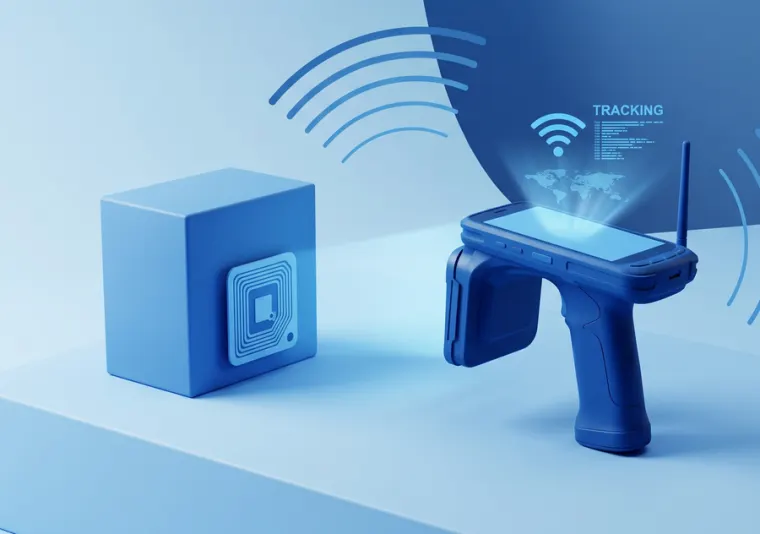
What RFID Pallet Tracking Actually Tells You (And What It Doesn't)
What gets packaged and sold as smart pallet technology is, in most cases, a ten-cent sticker on a rickety wooden pallet. Here is what passive RFID can and cannot see.
 Rodrigo CastroCo-Founder & President5 min read
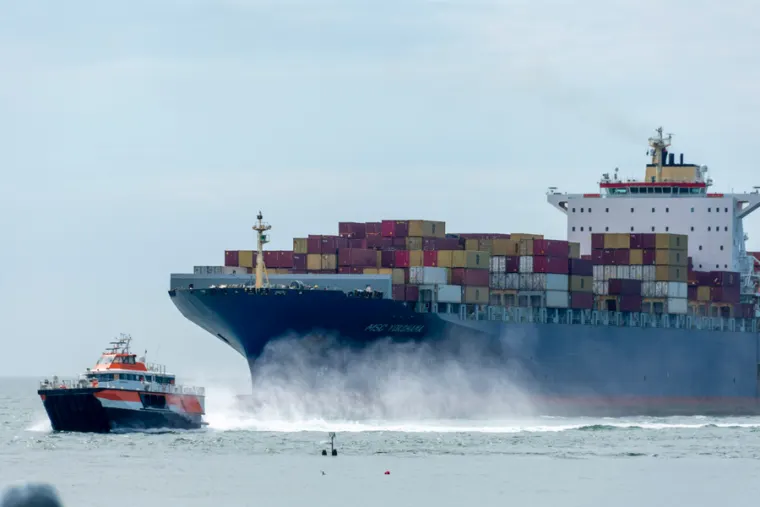
Pallets, Paperwork, and Proof: How Two of the Least Sexy Industries Finally Found Each Other
Incoterms decide the exact point where risk transfers from seller to buyer. Almost nobody has the data to enforce what they are supposed to guarantee.
Rodrigo CastroCo-Founder & President6 min read
How a Viral Cargo Theft Made the Case for Smart Pallets
Cargo theft losses across the US and Canada surged 60% to nearly $725 million, with food and beverage hit hardest and automotive supply chains increasingly exposed.
Rodrigo CastroCo-Founder & President5 min read